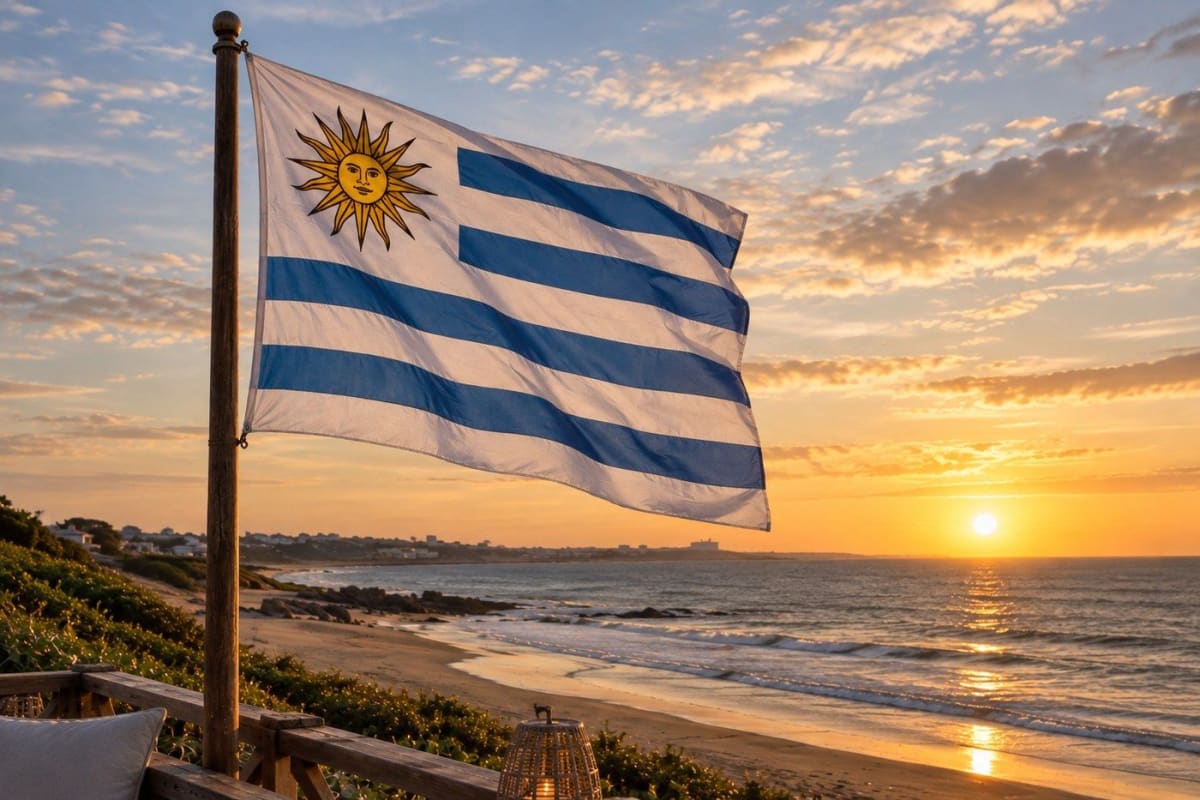
Off-grid living in Maldonado sounds like a dream to many people: waking up with views of the sierras, drinking coffee under an old tree, using your own water, having solar panels on the roof, picking vegetables from your garden, and hearing crickets at night instead of traffic.
But anyone who seriously wants to start off grid living in Uruguay needs to look beyond the dream. A chacra is not a holiday photo. It is a place where you need to live, work, build, recover, grow food, welcome guests, and solve problems.
That is why buying a chacra in Uruguay is both exciting and risky. The right place can give you freedom. The wrong place can drain your money, energy, and patience.
Maldonado is one of the most interesting regions for off grid living in Uruguay because it combines something rare: nature, hills, coastline, villages, international visitors, good routes, tourism, and opportunities to earn an income. You can live rurally without completely disappearing from the world.
Start With Your Life Model, Not With a Piece of Land
The biggest mistake people make when buying land in Uruguay is starting on real estate websites. They see a beautiful view, an old house, a few trees, and they think: “This is it.”
But a chacra has to fit your daily life, not just your fantasy.
Before you buy, answer three questions:
What do I want to do here every day?
Where will my income come from?
How much comfort do I really need?
A remote worker needs different land than someone with horses. A retired couple has different priorities than a family with children. Someone who wants to build an eco-retreat must look at land differently from someone who mainly wants peace and privacy.
A useful exercise: write down your ideal Tuesday. Not your ideal holiday day, but an ordinary Tuesday in June. Where do you buy groceries? How do you work? How warm is your house? What do you do if the water pump breaks? How far is the doctor? Who do you call if your car gets stuck?
If that Tuesday still feels good, you are searching more realistically.
The Three Models: Living, Income, or Investment
There are roughly three ways to look at a chacra.
The first model is living. You are looking for peace, nature, privacy, and a simpler life. In that case, access, water, internet, and comfort are more important than having the maximum number of hectares.
The second model is income. You want to rent out a cabaña, host workshops, organize retreats, sell products, or offer services to expats. In that case, you do not only need land. You need a story, accessibility, and a market.
The third model is investment. You buy in an area with future value, such as José Ignacio, Garzón, or Pueblo Edén. You pay more, but you also buy brand value, tourism appeal, and potential for high-end rentals.
The smartest buyers know which model they are following before they start looking.
The Best Places in Maldonado for Off-Grid Living
Maldonado is not one single market. A chacra near Aiguá is completely different from a chacra near José Ignacio. One place gives you more silence; another gives you more rental potential. One is more practical for everyday living; another is stronger as a premium project.
Pan de Azúcar and Ruta 60: The Best Balance
For many people, Pan de Azúcar is the most sensible choice. Not because it is the most famous name, but because it works practically.
Pan de Azúcar is located at the crossing of Ruta 9, Ruta 37, Ruta 60, and the Interbalnearia. The town is also relatively close to Piriápolis, Punta del Este, and Laguna del Sauce airport. For off-grid living, that matters: you live rurally, but you remain reachable.
This is a good area for families, retirees, remote workers, and people who want to live semi-off-grid. You can install solar panels, collect rainwater, start a vegetable garden, and still reach shops, mechanics, healthcare, and building supplies without losing half a day.
The area around the Sierras de las Ánimas is especially interesting because there are already rural initiatives around wineries, olive groves, vineyards, cabañas, restaurants, artisanal products, and nature experiences. That means you do not have to invent the market from zero. There is already an audience for peace, nature, and local experiences.
Practical lesson: Pan de Azúcar is ideal if you want freedom, but you do not want to become dependent on bad roads and long distances.
Pueblo Edén and Ruta 12: For Expats, Retreats, and Rentals
Pueblo Edén is attractive for people who want to combine peace with atmosphere. The village is located on Ruta 12, shortly after crossing Ruta 9, and is officially described as a classic rural Uruguayan village with a plaza, chapel, gastronomy, homemade meals, and crafts. (maldonado.gub.uy)
Here, you are not just buying land. You are buying a story.
That makes Pueblo Edén strong for expats, artists, coaches, writers, retreat organizers, and people who want to rent out a cabaña or guesthouse. The area feels rural, but not empty. It has identity, visitors, and appeal.
Still, this is no longer a cheap beginner’s area. Beautiful land with water, access, trees, and views often already comes with a lifestyle price. That is why it is smarter to buy smaller and better here, rather than large and complicated.
Practical lesson: near Pueblo Edén, do not buy hectares for your ego. Buy a place that guests understand and that you can actually maintain.
Aiguá, Ruta 39, and Sierra de Carapé: For Real Off-Grid Living
Aiguá is for people who want to go deeper into the countryside. The town lies in the north of Maldonado, in the valley of the Sierra de Carapé, near routes 109, 39, and 13. The area is officially described as suitable for ecotourism, with hills, caves, streams, waterfalls, green native woodland, hiking, trekking, mountain biking, and birdwatching.
This is the area for people thinking about homesteading in Uruguay, permaculture, animals, natural building, food forests, bees, silence, and a long-term project.
But Aiguá also asks for more independence. You need to learn better Spanish, be practical, own tools, keep spare parts, and build good relationships with neighbors. A broken pump is not a small problem here. A bad road can quickly become a daily obstacle.
Practical lesson: Aiguá is stronger for people who genuinely want off-grid living than for people who mainly want a beautiful lifestyle photo.
José Ignacio, La Juanita, and Laguna Garzón: Premium, More Expensive, and Commercially Strong
José Ignacio definitely belongs in this guide, but with the right expectations. This is not the place for cheap off-grid living. This is the premium zone.
José Ignacio is described by the Intendencia as an old fishing village on the Atlantic Ocean that has become an exclusive destination with beautiful beaches, residences, and strong gastronomy. Pueblo Garzón lies more inland and attracts artists and international visitors.
For off-grid living, the area behind José Ignacio is especially interesting: La Juanita, Camino Sainz Martínez, Anastasio, Medellín, Laguna José Ignacio, and toward Laguna Garzón. Here you can think of luxury rentals, design cabañas, wellness retreats, nature experiences, horses, photography, gastronomy, or a high-end eco-project.
Asking prices confirm that this is a more expensive market. Real estate portals show chacras around José Ignacio ranging from several hundred thousand dollars to luxury farm and ranch properties in the millions. These are asking prices, not official sale prices, but they clearly show the premium position of this area.
Be careful, though: around Laguna José Ignacio and Laguna Garzón, land planning plays a bigger role. There is a specific local plan for the area between the José Ignacio and Garzón lagoons, which means building possibilities and restrictions must be checked very carefully.
Practical lesson: José Ignacio is not the best place to start cheaply, but it is one of the strongest locations if you have capital, taste, and a clear concept.
What Are You Really Buying When You Buy a Chacra?
A good chacra is not just a beautiful piece of land. It is a working system.
You are buying water. You are buying access. You are buying soil. You are buying distance from services. You are buying neighbors. You are buying legal certainty. You are buying maintenance. You are buying opportunities to create income.
If you only look at the view, you are buying emotion. If you look at systems, you are buying freedom.
Water, Access, and Soil
For rural property in Uruguay, three things matter more than anything else: water, access, and soil.
Water is the foundation. Ask whether there is a pozo, tajamar, arroyo, stream, or rainwater system. Ask how deep the well is. Ask how much water it produces. Have the water tested. Ask what happens during dry months. A water source that looks good in August may disappoint you in February.
Access is the second foundation. Do not only visit on a dry, sunny day. Go after rain. A bad camino makes everything more expensive: building supplies, rentals, mechanics, emergencies, and daily shopping.
Soil is the third foundation. Check whether you can actually grow things. Look at slope, erosion, stones, clay, wind, shade, drainage, and places where water remains after rain.
Mini-checklist for viewing a chacra:
Always ask for the padrón number.
Walk the land yourself, not only with the agent.
Notice where the sun is in the morning and late afternoon.
Ask neighbors what the road is like in winter.
Check mobile reception in several places.
Look for low points where water collects.
See whether there is natural wind protection.
Ask where animals, tractors, and suppliers enter the property.
Padrón, CONEAT, and Escribano
The padrón number is essential. Without a padrón, you cannot seriously investigate a piece of land.
With that number, you can consult information about soil and productivity through CONEAT. MGAP offers an official CONEAT consultation and also a procedure for requesting a productivity index for rural padrones.
You also need your own escribano. Not the seller’s. Not someone who is “probably fine.” Your escribano must check whether the title is correct, whether there are debts, mortgages, liens, servidumbres, unclear boundaries, and whether the seller is legally allowed to sell.
Never buy a chacra because someone says: “Everything is in order.”
Make them prove that everything is in order.
Anyone who is moving to Uruguay should also understand that buying property is not the same as obtaining residency. Uruguay’s official residency page explains that foreigners need to determine which residency route applies to their situation in order to obtain residency and eventually a cédula.
What Does a Chacra in Maldonado Cost?
The question “what does a chacra cost?” is logical, but too simple. The better question is: what does it cost to live well there?
MGAP reported an average price of USD 4,070 per hectare for rural land transactions in Uruguay during the first semester of 2025. That figure is useful as a general reference, but it is not a fixed price for small lifestyle chacras in Maldonado. A small chacra near Pueblo Edén, José Ignacio, or Pan de Azúcar can be much more expensive per hectare than large agricultural land elsewhere.
That is why you should not only look at price per hectare. Look at liveability.
Cheap bare land without water, a house, access, or internet can eventually become more expensive than a pricier chacra where the basics already work.
The Budget Rule: Purchase, Due Diligence, and Making It Livable
Think in three budgets.
Budget 1: purchase.
This is the price of the land, chacra, or house.
Budget 2: checks and purchase costs.
Think of the escribano, registrations, taxes, possible agent commission, translations, and technical checks. For the Impuesto a las Transmisiones Patrimoniales, the Uruguayan tax authority states that for paid transfers, the rate is 2% for the seller and 2% for the buyer. (gub.uy)
Budget 3: making it livable.
This is where people often forget the most: water pump, filters, tanks, solar panels, batteries, backup generator, septic system, roof, insulation, fencing, tools, internet, driveway, trees, compost, storage, and reserve money.
An important rule: never put all your money into the purchase. A chacra without a buffer does not give freedom. It gives stress.
How Do You Build a Self-Sufficient System?
Self-sufficient living in Uruguay does not mean producing everything yourself from day one. It means becoming less dependent every season.
Start by observing. Live there first. Watch where the wind comes from. See where water collects. Notice which places stay cool in summer. See where the winter sun enters. Notice where you like to sit. Land tells you a lot, but not in one weekend.
Then build in layers.
Layer one is housing: roof, warmth, bathroom, kitchen, sleeping space, storage, and safety.
Layer two is water: pozo, rainwater collection, tanks, filters, pipes, and efficient irrigation.
Layer three is energy: solar panels, batteries, generator as backup, efficient appliances, and good consumption habits.
Layer four is food: compost, mulch, vegetable garden, fruit trees, herbs, chickens, and later perhaps bees or larger animals.
Layer five is income: rentals, workshops, products, remote work, or services.
Most people do this in reverse. They start with chickens, fruit trees, and Instagram photos while the house still leaks and the water pump is unreliable. That makes off-grid living hard.
The better order is boring, but it works: first water, electricity, roof, and access. Then the romance.
What Do You Live From on a Chacra?
This may be the most important question in the entire blog: what do you live from?
Most people do not live entirely from their land, especially in the first years. A vegetable garden reduces costs, but it does not pay for a car. Chickens give eggs, but not a stable monthly income. Fruit trees take time.
The strongest strategy is a mix.
Remote work is often the best foundation. Think consulting, software, marketing, administration, coaching, translation, online lessons, design, or content. This gives you the calm needed to build your chacra slowly.
**Rentals **can work if your location makes sense. Pueblo Edén, Pan de Azúcar, Ruta 60, José Ignacio, Garzón, and some areas around San Carlos have more tourism logic than a random place deep in the campo.
Workshops fit Maldonado well: permaculture, yoga, writing, photography, breathwork, cooking, fermentation, natural building, Spanish, birdwatching, or stargazing.
Local products can start small: honey, jam, herbs, eggs, seedlings, olive oil, bread, natural soap, flowers, or dried herbs.
Services for expats are underrated. New foreigners often need help with translation, property care, maintenance, suppliers, guest reception, construction coordination, garden management, and local guidance.
My favorite model is simple: one stable income, one local income source, and one self-sufficient system that lowers your costs.
That could look like this:
You work online three days a week.
You rent out one cabaña on weekends.
You keep chickens, fruit trees, and a vegetable garden to reduce costs.
You organize four workshops or retreats per year.
You slowly build a brand around your place.
That way, your chacra becomes more than an expensive hobby. It becomes a living system.
Conclusion
Off-grid living in Maldonado is not about disappearing. It is about living smarter.
If you want the best balance, look at Pan de Azúcar and Ruta 60. If you want atmosphere, expats, and retreats, look at Pueblo Edén. If you want real campo life and self-sufficiency, look at Aiguá and Ruta 39. If you want premium rentals, eco-design, and international appeal, look at José Ignacio, La Juanita, and Laguna Garzón.
Do not buy a dream. Buy water, access, soil, paperwork, reachability, and a realistic income plan.
After that, you can build your paradise. Step by step.