
Uruguay is often seen as a country of beaches, calm living, safety and quality of life. But anyone who only thinks of Punta del Este, La Barra or José Ignacio is missing an important part of the story. Behind the famous coastline lies a surprisingly rich network of national parks, wetlands, lagoons, islands, dunes, sierras, caves and UNESCO-recognized natural areas.
For travelers, this makes Uruguay much more than a classic beach destination. For real estate buyers, it is just as important. Nature is no longer a secondary detail. International buyers are increasingly looking for beautiful homes in places that offer privacy, open space, protected landscapes, clean surroundings and a lifestyle that is not dominated by mass tourism.
This is exactly where Maldonado becomes so attractive. Buyers who invest in Punta del Este, La Barra, Manantiales, José Ignacio or the surrounding countryside are not only buying a home near the coast. They are buying access to a wider region where the ocean, lagoons, gastronomy, culture, nature and exclusive real estate are all closely connected.
For anyone exploring Punta del Este and Maldonado real estate, this is a key argument. Uruguay is not a country of dramatic mountains or massive national parks. Its value is more subtle: Atlantic dunes, bird-rich wetlands, protected lagoons, marine wildlife, rolling sierras and small towns where tourism still feels human and authentic.
1. The Correct Context: National Parks, SNAP and UNESCO in Uruguay
What is SNAP?
In travel language, people often speak generally about “Uruguay national parks”. Officially, the system is broader. Uruguay works with the Sistema Nacional de Áreas Protegidas, usually known as SNAP, the National System of Protected Areas. This system includes not only national parks, but also protected landscapes, natural monuments, habitat and species management areas, and other protected zones with specific environmental purposes.
That distinction matters. Not every protected area in Uruguay is legally a national park, but many of these places are essential for biodiversity, tourism and the country’s international image. According to Uruguay’s Ministry of Environment, SNAP is designed to protect biodiversity, ecosystems, landscapes and cultural elements while also allowing social and economic development. The official SNAP information refers to 22 protected areas covering 372,824 hectares of land and marine territory.
For real estate buyers, this is more than a technical detail. Protected areas show where Uruguay preserves its natural identity. They also help explain why certain regions remain attractive: not because everything can be developed, but because valuable landscapes are protected.
The Full SNAP List: From Cabo Polonio to Isla de Lobos
To understand Uruguay as a nature destination, it is important to look beyond the most famous names. The official SNAP list includes Cerro Verde e Islas de La Coronilla, Rincón de Franquía, Esteros y Algarrobales, Laguna Garzón, Humedales de Santa Lucía, Montes del Queguay, Islas del Queguay, Grutas del Palacio, Laguna de Castillos, Laguna de Rocha, Chamangá, Paso Centurión y Sierra de Ríos, Quebrada de los Cuervos y Sierras del Yerbal, Valle del Lunarejo, Cabo Polonio, Esteros de Farrapos e Islas del Río Uruguay, Humedales e Islas del Hum, Isla de Flores, Isla e Islote de Lobos, San Miguel, Arequita and Laguna Negra.
That may sound like a lot, and most travelers or buyers will not visit every site. For an audience interested in Maldonado real estate, the most relevant areas are especially Laguna Garzón, Isla de Lobos, Cabo Polonio, Laguna de Rocha, Bañados del Este, Arequita, Grutas del Palacio and Manantiales Serranos.
Not because all of them are located in Maldonado. They are not. But together, they tell a stronger story: Uruguay is a small country with a remarkably varied natural identity. And Maldonado is strategically positioned between the Atlantic coast, protected lagoons, the wilder landscapes of Rocha and the sierras of Lavalleja.
2. Maldonado as a Base: Nature Close to Luxury, Beach Life and Gastronomy
Laguna Garzón: The Natural Border Between Maldonado and Rocha
Laguna Garzón is probably one of the most important natural areas for anyone looking at real estate in Maldonado. It sits directly on the border between Maldonado and Rocha and forms part of the Atlantic lagoon system of the Southern Cone. Because of its connection with the Atlantic Ocean, the area contains a valuable mosaic of landscapes, ecosystems, fauna and flora within a relatively compact territory.
For property buyers, Laguna Garzón is especially interesting because it marks the transition between two worlds. To the west are José Ignacio, Manantiales, La Barra and Punta del Este. To the east begins Rocha, where the coast feels wilder, emptier and more natural.
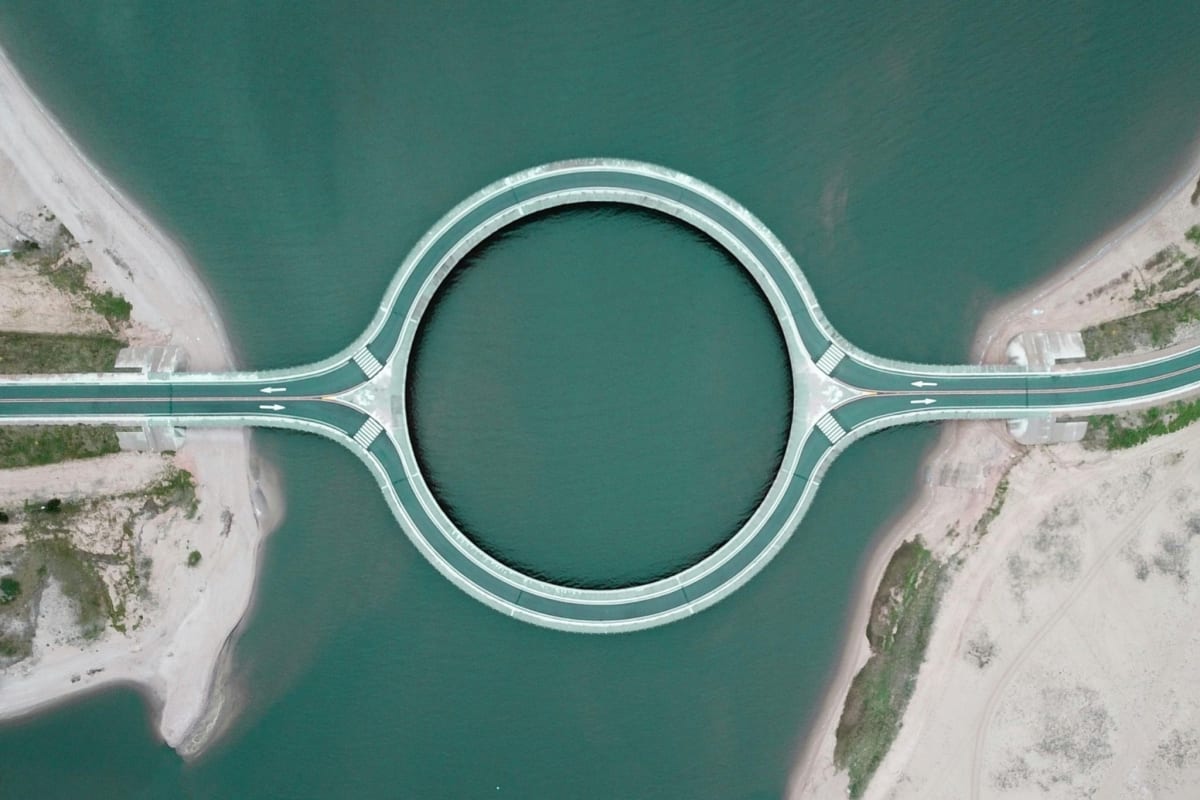
That makes this area strategically important. Buyers remain close to the premium real estate markets of Maldonado, while also being near protected coastal nature. The circular bridge over Laguna Garzón is not only an architectural landmark. It symbolizes the passage from refined Maldonado to the more untouched Atlantic landscapes of Rocha.
For anyone looking at houses for sale in Uruguay, this is a powerful lifestyle argument. A home in Maldonado offers access to beaches, restaurants and services, but also to natural areas that protect the character of the region.
Isla de Lobos: Ocean Nature Just off Punta del Este
One of the most underrated nature arguments for Maldonado lies directly off the coast of Punta del Este: Isla e Islote de Lobos y su entorno sumergido. According to Uruguay’s Ministry of Environment, this protected area is located 8.1 kilometers from Punta del Este and is an important habitat for the South American fur seal and the South American sea lion. The protected marine environment also includes rocky reefs, fish, algae, invertebrates, dolphins, turtles and migration zones for marine mammals.
For tourists, Isla de Lobos is mostly known for its sea lions. For buyers, it is more meaningful than that. It shows that Punta del Este is not only a resort city with apartments, beaches and beach clubs. It is also a coastal destination with a protected marine environment just offshore.
This adds depth to Maldonado’s premium appeal. A buyer investing in Punta del Este, La Barra, Manantiales or José Ignacio is buying into a region where city life, ocean landscapes and nature are unusually close together. That combination is unique.
3. Practical Guide: The Best Nature Trips from Punta del Este and Maldonado
Which Parks and Natural Areas Are Within Reach?
For buyers, practical access matters. A natural area may be beautiful, but it becomes more valuable for everyday lifestyle when it can be reached for a day trip, a weekend escape or a visit with family and guests.
Depending on the starting point, route and road conditions, these are some of the most interesting nature destinations from Punta del Este and Maldonado:
Isla de Lobos lies roughly 8 kilometers off the coast of Punta del Este. It is the most direct nature reference for Maldonado and an excellent example of the region’s ocean identity. Official information.
Laguna Garzón sits on the border between Maldonado and Rocha. From Punta del Este, it is generally around 40 to 50 kilometers away, depending on the route and exact departure point. It is especially relevant for buyers in José Ignacio, Manantiales and eastern Maldonado.
Laguna de Rocha lies farther east, in the direction of Rocha. It is an important protected landscape and a valuable destination for birdwatching, slow travel and coastal nature. For Maldonado buyers, it reinforces the idea that the eastern coast of Uruguay offers much more than standard beach tourism.
Cabo Polonio is more of a full-day trip or weekend escape than a quick drive. It is not close enough for a spontaneous weekly visit, but it is close enough to form part of the broader Uruguay lifestyle story that attracts international buyers: wild, protected, different and unforgettable.
Arequita and Minas lie inland, toward Lavalleja. This area offers sierras, rock formations, inland landscapes and a completely different experience from the coast. For residents of Maldonado, it can be an attractive inland escape when they want nature without the beach.
Manantiales Serranos is not located near coastal Manantiales, La Barra or Punta del Este. It is in Lavalleja, around Minas, Villa Serrana and Solís de Mataojo. This is important to communicate correctly. Its relevance to Maldonado is not direct proximity, but the broader image of Uruguay as a country of nature, geology and sustainable tourism.
For buyers, the conclusion is clear: Maldonado is not an isolated coastal market. It is an excellent base. You have Punta del Este and its services, La Barra and Manantiales for restaurants and lifestyle, José Ignacio for exclusivity, Laguna Garzón for nature, Rocha for adventure and Lavalleja for sierras and geotourism.
4. Cabo Polonio and Bañados del Este: The Wild Coast That Strengthens Uruguay’s International Appeal
Cabo Polonio: National Park, Dunes and Sea Lions
Cabo Polonio is located in Rocha, not Maldonado. Still, it plays a major role in how international visitors experience Uruguay. It is one of the country’s most iconic national parks and a symbol of the wilder Atlantic coast.
Uruguay’s Ministry of Environment describes Cabo Polonio as a coastal-marine area with sandy beaches, rocky points, dunes, native coastal forest, small wetlands, ocean environments and islands. Uruguay’s tourism authority also highlights its mobile dune system, with areas reaching more than 20 meters high.
Cabo Polonio is not attractive because it is luxurious. It is attractive because it is different. Access is controlled, the landscape feels wild, and the rhythm is shaped by wind, dunes, sea and simplicity. For travelers, that experience creates a strong contrast with Punta del Este.
For Maldonado real estate buyers, Cabo Polonio is important as a reference point. It shows that Uruguay still has real Atlantic wilderness. Buyers do not need to live there to benefit from that identity. The existence of places like Cabo Polonio strengthens Uruguay’s image as a destination for people who value nature, calm and authenticity.
Bañados del Este: A UNESCO Biosphere Reserve on the East Coast
One of the most important UNESCO natural areas for this topic is Bañados del Este. This biosphere reserve was recognized in 1976 and, according to Uruguay’s UNESCO commission, covers more than one million hectares in the east of the country across Rocha, Maldonado, Treinta y Tres and Cerro Largo.
This is especially relevant for buyers interested in Maldonado. Bañados del Este is not a small park in one single location. It is a vast natural region with wetlands, lagoons, coastal areas, birds, dunes and ecosystems that give eastern Uruguay much of its character.
For Maldonado, this is a strong argument. The region is not disconnected from nature. It forms part of a wider eastern corridor where protected landscapes, Atlantic coastlines, lagoons and wetlands come together.
For buyers, this means Maldonado is more than a place for summer homes. It is a base for exploring a UNESCO-recognized natural region. From Punta del Este, La Barra, Manantiales or José Ignacio, residents can move toward Laguna Garzón, Laguna de Rocha, Cabo Polonio and the wetlands of the east. This makes a second home in Uruguay more interesting for people who want more than beach days and swimming pools.
5. The UNESCO Geoparks: Grutas del Palacio and Manantiales Serranos
The Uruguay Beyond the Coast: Geology, Sierras and Sustainable Tourism
In addition to biosphere reserves, Uruguay also has UNESCO Global Geoparks. Today, Grutas del Palacio and Manantiales Serranos are especially important for the country’s nature and heritage story.
Grutas del Palacio is located in the department of Flores and is not about beaches, but about geology, rock formations, paleontology, archaeology, landscape and culture. The official geopark website describes it as a UNESCO Global Geopark in the south-central region of Uruguay, with different landscapes and sites of geological, paleontological, archaeological, historical and cultural importance.
Manantiales Serranos is more recent and is often misunderstood. It is not located near Manantiales on the coast, and it is not near La Barra. It is in Lavalleja, around Minas, Villa Serrana and Solís de Mataojo. According to the Uruguayan government, the area covers more than 2,000 km² and was recognized on April 15, 2026, as a UNESCO Global Geopark, giving Uruguay its second geopark alongside Grutas del Palacio.
Uruguay is gaining international recognition for nature, geology, landscape and sustainable tourism. That strengthens the country as a lifestyle destination. And that is highly relevant for Maldonado.
A buyer in Maldonado is not only buying a property close to the sea. They are buying into a country that is small enough to feel accessible, but varied enough to keep discovering for years: coast, sierras, lagoons, vineyards, art, villages, UNESCO sites and protected natural areas.
6. What These Natural Areas Mean for Real Estate Buyers in Maldonado
For Maldonado real estate, nature is not just background scenery. It is part of the value proposition.
Punta del Este has international visibility. La Barra has energy. Manantiales has design, gastronomy and a more refined coastal atmosphere. José Ignacio has exclusivity. The countryside offers chacras, vineyards, peace and space. But the natural areas around and beyond Maldonado give all of this more depth.
A buyer looking at Uruguay today is usually not only asking how many bedrooms a property has. The questions have changed. How does the area feel outside January? Is there peace? Is there nature? Is there privacy? Can I host guests who want more than a swimming pool? Is this a region that will remain attractive in the long term?
Maldonado scores strongly because it combines several worlds. It offers the services of Punta del Este, the coastal villages of La Barra and Manantiales, the exclusivity of José Ignacio, the proximity of Laguna Garzón, the marine character of Isla de Lobos and access to Rocha and Lavalleja.
This makes the region more versatile than many other coastal real estate markets. In some countries, coastal property mainly means crowds, apartments and seasonal rentals. In Maldonado, coastal property can also mean nature nearby, open space, gastronomy, culture, protected landscapes and access to a slower rhythm of life.
Protected natural areas can also create indirect real estate value. They make a region more attractive by preserving landscapes that cannot simply be replaced. A coastline that is completely overbuilt eventually loses its exclusivity. A region where nature, tourism and real estate remain in balance can become more interesting for buyers who think beyond short-term gains.
That does not mean every piece of land near a protected area is automatically a good investment. Quite the opposite. Buyers need to be careful. Around protected zones, building rules, environmental regulations, water management, access rights and land-use restrictions can play an important role.
Anyone buying land, chacras or coastal property should always carry out proper due diligence on zoning, buildability, water, access, title, services and local rules. This is where a good local real estate advisor and a reliable escribano become essential.
At Punta del Este Houses, we help buyers do more than see what is available. We help them understand which location fits their lifestyle, budget and long-term plan. For one buyer, that may be an apartment in Punta del Este. For another, it may be a house in La Barra, a design home in Manantiales, a chacra near José Ignacio or a quieter project closer to the natural corridor of Laguna Garzón.
Looking for a property that combines beach life, nature, privacy and long-term lifestyle value? Explore our selection of houses for sale in Uruguay or discover more through Punta del Este Houses.
The best investment is not always the property with the largest swimming pool. Often, it is the place with the strongest combination of accessibility, privacy, natural surroundings, scarcity and future appeal.