Piriápolis
18 properties available
About Piriápolis
Before Punta del Este existed, there was Piriápolis. That matters—not as a footnote, but as the key to understanding what this city truly is and why it endures.
In 1890, a Uruguayan-Italian entrepreneur named Francisco Piria acquired a vast stretch of coastline framed by rolling hills and set out to create Uruguay's first beach resort from the ground up, inspired by a visit to the south of France. He built a port, a coastal promenade, a luxury hotel, and eventually the Gran Hotel Argentino—which, when it opened in the 1930s, was the largest hotel in South America, accommodating up to 1,200 guests. He also constructed a castle for himself. Piria was not a man of small ambitions. The city that bears his name is still defined by that original vision: grand in scope, relaxed in pace, and entirely at ease with its own identity.
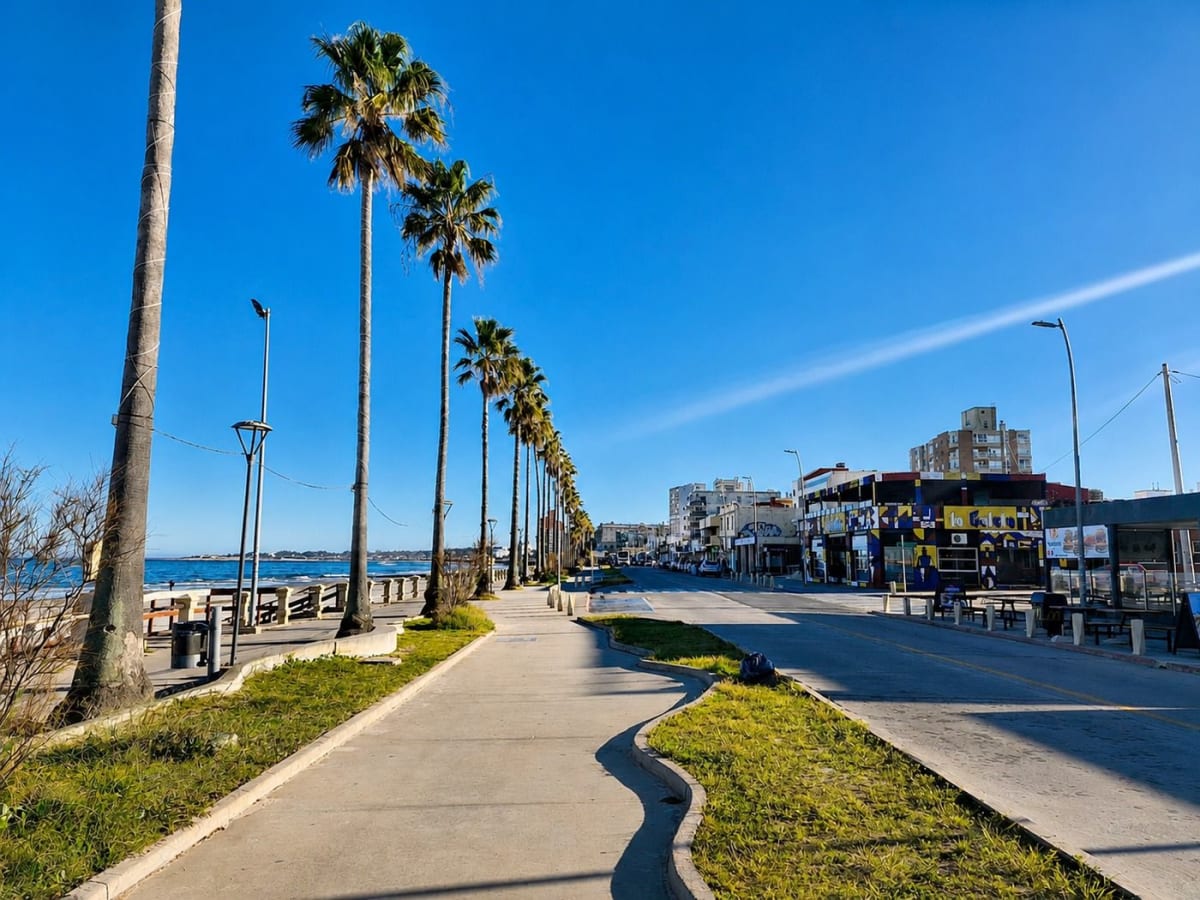
What physically distinguishes Piriápolis from every other coastal town in Uruguay is its topography. It is the only resort in the country where hills meet the beach. Cerro San Antonio, Cerro del Toro, and the more distant Cerro Pan de Azúcar—Uruguay's third-highest point at 423 meters—create a dramatic backdrop to a waterfront that elsewhere along the coast is flat in every direction. The Rambla de los Argentinos, the city's broad seafront promenade, sits at the foot of these hills and has been the social heart of Piriápolis for over a century. People stroll it in the morning, cycle at sunset, and gather along it in the evenings in that unhurried Uruguayan way that makes an hour feel like all the time you need.
The beach itself sweeps gracefully around the bay, calm and family-friendly in a way that suits the city's character. There are no dangerous Atlantic swells here—Piriápolis faces the Río de la Plata, not the open ocean, and the water reflects that. For stronger surf and a more exposed coastline, neighborhoods stretching east toward Punta Negra and Ocean Park offer a different experience just a short drive away.
For property buyers, Piriápolis presents one of the clearest value propositions on the Maldonado coast. Beachfront properties here are priced at roughly $1,800 to $2,500 per square meter—compared to $4,000 per square meter or more in Punta del Este—with two-bedroom waterfront units typically ranging from $190,000 to $220,000. The market has shown steady appreciation since 2008, and seasonal rental demand is strong, with well-located properties on top Airbnb platforms earning over $1,900 per month during peak season. The price gap with Punta del Este is a feature for buyers who understand that 30 kilometers of highway separate them, not 30 years of development.
The permanent population is small—around 9,000 residents year-round—which means the city retains an authenticity that larger resorts inevitably lose as they grow. Local shops, a working port where you can buy fish straight from the boats, and more than 80 restaurants and cafés that have thrived on quality rather than foot traffic—Piriápolis has the substance of a real town beneath its resort surface. Expats who settle here often describe a similar experience: they arrived expecting a sleepy coastal retreat and found a community that has welcomed newcomers since 1890—and has become quite adept at it.
The Castillo de Piria, the founder's personal residence built in 1897, is now a free museum and one of the most genuinely intriguing buildings on the Uruguayan coast—a blend of architectural styles reflecting a man equally influenced by Italian classicism, Masonic symbolism, and his own restless imagination. It tells the story of the city better than any guidebook. A chairlift still runs up Cerro San Antonio to a small chapel with panoramic views over the bay, the port, and the hills beyond—a ten-minute ride that redefines the geography of the place.
Piriápolis is located 98 kilometers from Montevideo and 38 kilometers from Punta del Este, a position that grants it true independence without isolation. The Ruta Interbalnearia connects it seamlessly in both directions, and Capitán Curbelo International Airport is less than 30 minutes to the east. It is close enough to everything to be convenient, yet far enough from the peninsula's summer crowds to feel like a deliberate choice rather than a compromise. For buyers seeking the Uruguayan coast on their own terms—with character, value, and a history most resorts would invent if they could—Piriápolis is the answer that keeps coming up.
Properties in Piriápolis

Chacra with 2 Homes, Pond & Ocean Views

Elegant Home with Sea Views and Pool

Coastal Plot Near Rambla with Open Space (#236)

Prime Land Near Beach

Spacious Coastal Land for Future Living (#238)

Prime Oceanfront Land (#235)

Seaside Apartment Investment Ready Prime (107)

Apartment Designed for Effortless Living (304)