Market News
Is Real Estate in Uruguay a Good Investment in 2026?
Explore Uruguay’s 2026 property market, including economic trends, investment benefits, potential risks, and the best locations for long-term real estate growth.
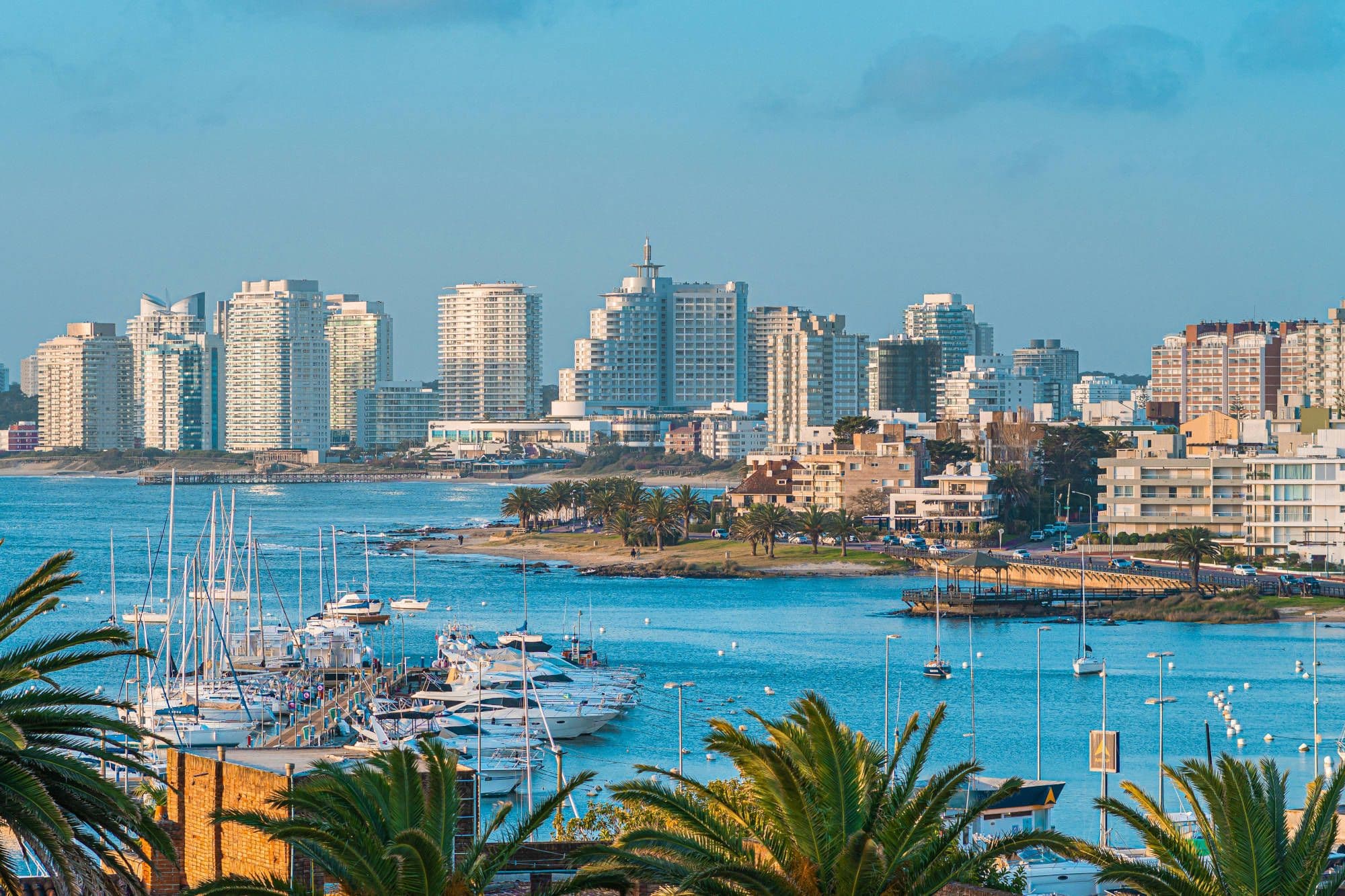
Punta del Este, Uruguay

Learn how to buy a house in Uruguay, what costs to expect, what to check, and how to avoid costly mistakes as a foreign buyer.
 By Liza – Founder & Real Estate Advisor at Punta HousesApril 7, 202615 min read
April 7, 2026
Buying a house in Uruguay can be a very good decision, but it is not a purchase you should approach lightly. Uruguay is attractive to foreign buyers because the country has a relatively clear investment framework and, in principle, treats foreign investors the same as local ones.
That said, “accessible” does not mean “carefree.” A property can look perfect in photos and still have problems that only become visible when someone thoroughly checks the ownership history, cadastral records, registrations, tax situation, building regularity, and the practical reality of the location. In Uruguay, the difference between a smooth purchase and an expensive mistake often comes down to one thing: whether you take the legal and technical checks as seriously as the property itself.
A good buyer does not just ask, “Do I like this house?” A good buyer also asks, “Is the title legally clean? Do the documents match reality? Are there hidden costs? Is this location right for how I will actually use the property? And will this still make sense five or ten years from now?” Those are the questions that help prevent costly mistakes.
One of the reasons buyers are drawn to Uruguay is that the country feels more understandable than many other markets in the region. The investment framework is not designed only for locals. Foreign investors are generally treated the same as domestic investors, and no prior authorization is required simply to invest.
Uruguay is also attractive because the purchase is tied to something tangible in a country many buyers see as relatively stable and livable. That does not mean every deal is good, or that every area performs equally well. It does mean that the broader country context is, for many buyers, easier to understand than in markets where legal uncertainty or opaque rules create more friction.
A common mistake is to confuse openness with simplicity. Yes, foreigners can buy in Uruguay without a nationality-based barrier. But that does not remove the need for proper due diligence. A buyer still needs a thorough title check, a review of the registrations, and a comparison between what is being sold in practice and what exists legally and cadastrally. The easier it is to enter a market, the more important it becomes to do so carefully.
Before negotiating the price, you need to verify the identity, ownership, and legal object being sold. That means checking the exact padrón number, the unit details if it is horizontal property, the cadastral information, and whether the seller is truly in a position to transfer clean title.
You also need to make sure that the physical reality matches the legal and cadastral reality. This is one of the most underestimated parts of buying in Uruguay. A house may have extensions, enclosed terraces, extra bedrooms, added bathrooms, storage spaces, or other changes that physically exist but were never fully regularized. If the actual construction does not match what is registered or declared, you may be buying headaches rather than added value.
A polished listing or beautiful description is not proof of anything. What matters is the ownership history and whether your escribano can confirm that the seller has the legal right to sell, that the property is correctly identified, and that there are no registered surprises that change the risk of the deal.
This is especially important with houses outside city centers, older homes, and properties that have been altered over time. If the house has additions that were never properly reflected in the cadastral records, the buyer may later face delays, regularization costs, or administrative issues when reselling, financing, or further regularizing the property. A property should not only look attractive in photos, but also on paper.
The most expensive mistakes are not always dramatic. Very often, they are ordinary things buyers rush past because they fall in love with the location or assume the paperwork will somehow sort itself out later. In reality, the most common pitfalls are usually linked to incomplete due diligence, underestimating the total costs, misunderstanding the location, or trusting informal reassurances instead of documents.
A common problem is buying based on a lifestyle fantasy rather than real use. A road may seem charming on a sunny afternoon and turn out to be inconvenient in winter. A sea-view plot may have strong wind exposure, drainage issues, or practical limitations the buyer did not think about. A beautiful rural or semi-rural property may require more maintenance, more driving, more coordination with services, or more infrastructure work than expected. These are not legal issues, but they are still expensive mistakes if you discover them too late.
This matters more than many people think. If possible, visit the property at different times of the day. Check the access, the neighbors, the noise, the wind, how the land behaves after rain, the distance to services, and whether the property still makes sense outside the ideal season. A house can be beautiful and still be impractical for your real life. That gap between image and lived reality is one of the biggest silent mistakes in property buying, including in Uruguay.
If someone says, “That extension is fine,” “those taxes are paid,” or “we will sort out that paperwork later,” treat that as a signal to check more, not less. In a real estate transaction, verbal reassurance does not protect you. Registrations, cadastral documents, tax treatment, and notarial review are what protect you.
In practice, buying a house in Uruguay involves much more than agreeing on a price and signing a deed. A proper purchase includes notarial due diligence, a title study, review of the registrations, verification of cadastral and factual data, tax handling, and the formal registration of the transfer.
The escribano plays a central role in Uruguay. This is not a cosmetic formality. Notarial work is one of the main protections in the process, because the buyer needs someone who reviews the legal history, checks the documentary identity of the property, and handles the deed and registration correctly. That is why it is usually a bad idea to “simplify” the process by treating the paperwork as secondary.
A buyer who chooses a good escribano is not paying for bureaucracy, but for protection. In Uruguay, notarial work is central to the transaction. In real estate deals, the escribano’s fee is generally calculated according to the official notarial tariff rules, usually at 3% of the higher of the purchase price or the updated cadastral valor real.
A common mistake when buying property in Uruguay is that buyers focus almost entirely on the negotiated sale price and pay too little attention to the total cost of the purchase. In reality, you are not only paying for the property itself. You also need to take into account the Property Transfer Tax (ITP), the escribano’s fees, registry and administrative costs, and, if a real estate agency is involved, the agency commission. The ITP is 2% for the buyer and 2% for the seller. In Maldonado, the real estate commission is typically 3% for the buyer and 3% for the seller, usually plus VAT where applicable. In addition, the escribano’s fee in a standard sale is generally calculated under the official notarial tariff, usually based on 3% of the higher of the purchase price or the valor real, with possible extra costs such as certificates, registrations, and other file-related expenses.
That is why it is important to check everything that matters carefully — or have a good real estate agent and a reliable escribano check everything that matters for you — and to create a realistic total budget from the beginning. Always ask in advance for a clear written breakdown of taxes, professional fees, registrations, and additional costs, so you do not discover only at the end what the purchase will really cost.
The visible cost is the purchase price. The invisible cost is everything buyers assume will be minor and later discover is not. This can include the ITP, real estate commission, notarial costs, registry costs, connection or regularization issues, unpaid amounts that must be settled before transfer, and post-purchase repairs that did not stand out during the emotional phase of the search.
Another subtle point is that the tax base used for certain transfers is not necessarily equal to the market price you negotiated. That is precisely why it is not wise to make tax assumptions based on instinct or hearsay. Let your escribano calculate what truly applies in your case instead of relying on what “people say.”
If a property seems underpriced, ask yourself why. Sometimes it really is an opportunity. Sometimes it points to documentary issues, irregular construction, location problems, unresolved inheritance situations, access issues, or simply too much optimism on the buyer’s side about what can later be “sorted out.” The cheapest listing is not always the cheapest property once all legal, technical, and practical realities are taken into account.
Buying a house in Uruguay can be a smart move, but only if you take the process as seriously as the dream. The market can be very interesting for buyers who think clearly, check thoroughly, and understand that a property is never just a building — or for buyers who work with a good real estate agent and a reliable escribano to make sure everything that truly matters is properly checked.
The safest mindset is not fear, but discipline. Fall in love with the place if you want, but check everything that matters. Check the title. Check the registrations. Check the cadastral reality. Build a proper budget. Visit the area like someone who might actually live there, not like someone just passing through on a perfect afternoon. If you do that, you dramatically reduce the chance that a beautiful purchase turns into an expensive lesson.
A safe purchase starts with checking far more than the photos or the asking price. Buyers should confirm the ownership title, review the Property Registry information, verify the padrón and cadastral records, and make sure the physical house matches the legal and cadastral description. It is also important to check whether there are irregular extensions, unresolved tax issues, unpaid amounts, or documentation gaps that could create problems later. In practice, the safest approach is to have a reliable escribano and a good real estate agent verify everything that matters before any commitment is final. Official tools such as the Dirección Nacional de Catastro and the relevant registry services exist precisely for these checks
The purchase price is only one part of the total cost of buying a house in Uruguay. Buyers should also budget for the Property Transfer Tax (ITP), the escribano’s fees, registry and administrative costs, and, where applicable, real estate agency commission. In Uruguay, the ITP is 2% for the buyer and 2% for the seller. In Maldonado, real estate agency commission is commonly 3% for the buyer and 3% for the seller, usually plus VAT where applicable. The escribano’s professional fee is typically calculated under the official notarial tariff, often using 3% of the higher of the purchase price or the updated cadastral valor real, with additional file expenses, certificates, and registry costs potentially added depending on the case. That is why buyers should always ask for a full written breakdown of costs before signing anything.
A good real estate agent does much more than show houses. A serious agent helps buyers understand the real market value, the strengths and weaknesses of a location, the practical differences between areas, and the risks that may not appear in a listing. A good agent can also help buyers ask the right questions early, identify red flags, coordinate with the escribano, and avoid wasting time on properties that look attractive but do not hold up in reality. In a market where foreign buyers are allowed and treated equally under the law, the real advantage is not simply access to listings, but access to someone who knows how to guide the process intelligently and protect the buyer from avoidable mistakes.
The escribano is one of the most important professionals in the entire transaction. In Uruguay, the escribano is not a decorative extra but a central part of a safe property purchase. The escribano reviews the legal history of the property, checks the documentary identity of what is being sold, confirms whether the seller can legally transfer title, prepares the deed, and handles the registration path correctly. The official notarial rules published by the Asociación de Escribanos del Uruguay show just how structured and central that role is in real estate transactions. A buyer who skips or downplays this step risks turning a beautiful house purchase into a legal and financial problem later.

Liza is the founder of Punta Houses, with a background in real estate, construction, and tourism. After traveling across all continents and living as an expat in South America for over 12 years, she has developed a strong understanding of what international buyers are truly looking for. It is rarely just about a property — it is about lifestyle, location, and the right feeling. With a refined perspective on real estate and in-depth knowledge of the local market, Liza guides clients through every step of the buying process. Her approach is discreet, personal, and focused on finding the right match, with attention to detail and long-term value. She works with clients from around the world and communicates fluently in Dutch, English, Spanish, French, and German, ensuring a smooth and professional experience on an international level. For Liza, real estate is about more than transactions. It is about trust, insight, and creating opportunities that truly align with each client’s lifestyle and ambitions.
Explore Uruguay’s 2026 property market, including economic trends, investment benefits, potential risks, and the best locations for long-term real estate growth.

How long does it take to sell a property in Uruguay? The answer depends on pricing, location, presentation, paperwork, buyer profile, and strategy. This guide explains what really affects selling time in Uruguay and how owners can position their property to attract stronger buyers and sell with more confidence.
Learn why Uruguay real estate stands out for buyers seeking stability, energy security, green energy, sustainably sourced energy, quality of life, and long-term investment potential.