Is Real Estate in Uruguay a Good Investment in 2026?
Explore Uruguay’s 2026 property market, including economic trends, investment benefits, potential risks, and the best locations for long-term real estate growth.
Punta del Este, Uruguay

Learn why Uruguay real estate stands out for buyers seeking stability, energy security, green energy, sustainably sourced energy, quality of life, and long-term investment potential.
Arpil 7, 2026
There are moments in history when people invest mainly out of enthusiasm. Because markets are rising. Because money is cheap. Because everyone feels there is always more growth ahead. And then there are other moments — quieter, less exuberant, but often far more decisive — when people begin asking a different kind of question. Not only: where can I make money? But also: where does ownership still make sense? Where does a country still feel governable? Where is value still tied to something tangible, useful, and relatively stable?
That is the real starting point of this blog. Not fear. Not panic. Not politics. Simply the observation that many buyers are looking at real estate differently today than they were a few years ago. They are not only looking for returns. They are looking for context. They want to understand what kind of country their property sits in, how exposed that country is to external shocks, how reliable the infrastructure is, how livable daily life feels, and whether that place still seems sensible over the long term.
That is exactly why Uruguay real estate is appearing more often in conversations about international diversification, relocation, and long-term ownership. Not because Uruguay is the loudest market. Not because it sells itself through dramatic slogans. But because of several fundamental points, it offers something many buyers have become more sensitive to: stability, energy security, quality of life, and a relatively understandable environment for ownership and investment. Uruguay officially presents itself as an open economy with equal treatment for domestic and foreign investors.
What makes this shift interesting is that it goes deeper than real estate itself. What many buyers are looking for today is not a “quick deal,” but a place where capital can rest without becoming disconnected from reality. A house, a plot of land, an apartment, or a second home is not merely a financial object. It exists in a neighbourhood, in a city, in an energy system, in a legal framework, in a country. And when the world feels less predictable, that broader context becomes much more important.
|At first glance, stability can sound like a rather dull concept. It does not have the glamour of “high returns,” the excitement of an emerging hotspot, or the emotional pull of a dream home by the sea. But that is exactly why it is often underestimated. As long as things feel relatively smooth, stability seems almost invisible. It is only when the world becomes more nervous that people realise how much they value it.
In real estate, stability means far more than a market where prices do not swing wildly. It refers to the broader environment in which that real estate exists. Does the country feel institutionally clear? Are the rules understandable? Do basic systems function? Does everyday life feel relatively coherent? Can someone picture themselves not only buying there, but also living there, renting there, managing there, or relying on that property over time? Those are the questions carrying more weight today.
That is why many international buyers are no longer looking only at what is “cheap” or “trending.” They are looking at markets that remain convincing even outside euphoric conditions. These are often markets where value does not rely purely on marketing, but on something more fundamental: governability, livability, and trust in the wider environment.
The wider global backdrop plays a major role here. The Global Peace Index 2025 noted another deterioration in global peacefulness, reflecting a broader climate of geopolitical tension and uncertainty. In itself, that does not mean every buyer suddenly becomes fearful. But it does change how people think about risk.
In calmer times, people are more willing to focus primarily on upside. In more uncertain times, different questions become relevant: how resilient is a country? How dependent is it on external factors? How predictable does it feel? How easy is it likely to remain to own, use, or pass on property there? That is not an ideological reaction. It is simply what happens when the world feels less self-evident.
For real estate, this means the country context matters far more. Buyers are not only evaluating the home, the view, or the price per square metre. They are also evaluating the system around it. A beautiful property in a fragile or opaque environment can suddenly seem much less attractive. A slightly less spectacular home in a country that feels coherent can become far more compelling.
When uncertainty increases, the appeal of tangible assets often grows with it. That is understandable. Cash is liquid, flexible, and useful, but it remains abstract. It is a number. It represents purchasing power, but not a direct physical presence. Property, by contrast, is concrete. You can see it, use it, improve it, rent it out, live in it, or pass it on. It exists quite literally in the real world.
That matters more than it may seem. In periods of higher uncertainty, many people are not only looking for returns, but also for something solid. They want at least part of their wealth tied to something with function, place, and practical value. Real estate does exactly that. It is not just an investment, but also a large-scale utility asset: a home, a retreat, a base, a long-term store of value.
That is what makes real estate different from assets that depend entirely on market sentiment. A property retains a practical core. People can live in it. It can generate rental income. It can serve as a second home or as part of a relocation strategy. It can stay in a family for generations. That combination of usability and value retention is precisely what makes real estate attractive when more abstract forms of wealth feel less reassuring.
Of course, property is never automatically safe or wise. A poor purchase remains a poor purchase. Location, pricing, construction quality, demand, accessibility, and legal structure all remain crucial. But that is exactly why the country itself matters so much. The value of real estate depends not only on the property, but also on the level of confidence the country around it inspires.
That is one reason why Uruguay property has started to appeal more strongly to some buyers. Not because the country is “the next hype,” but because it fits a more deliberate investment logic: less speculation on spectacle, more interest in a place where ownership remains sensible, tangible, and defensible over the long term.
Not long ago, energy was mostly treated as a technical issue. Something for utility providers, policymakers, or engineers. Today, that has changed. Energy has also become a real estate issue because it directly affects livability, reliability, and the question of whether a country is structurally prepared for the future.
When someone buys property for the long term, they are not just buying walls or land. They are, in effect, buying into a system. Into infrastructure. Into the way a country generates, distributes, and secures electricity. When that underlying layer is strong, property feels stronger too. Not necessarily more glamorous, but more rational.
A reliable energy system is not a minor detail. It underpins homes, communication, services, businesses, transport, and basic comfort. It affects not only costs, but also the broader sense that a country functions properly. For many buyers, this may not be the first selling point they mention, but it plays deeply into the question: can I imagine this place still making sense in ten or twenty years?
That is exactly why energy security is now more often part of the real estate conversation. Not because buyers have suddenly become energy experts, but because they understand more clearly that infrastructure and long-term confidence are linked. A country with a weak energy base feels more vulnerable. A country that appears robust and forward-looking in this area gains credibility.
Uruguay stands out here in a remarkable way. According to Uruguay’s official investment and energy information, 99% of electricity generation in 2024 came from renewable sources. Uruguay XXI also describes the country’s electricity mix as almost fully decarbonised, while the U.S. Commercial Service for Uruguay confirms the same 99% range and points to a mix of hydropower, wind, biomass, and to a smaller extent solar energy.
This is significant because it goes far beyond a pleasant green image. It says something about execution. About planning. About institutional continuity. Countries do not end up in a situation where nearly all electricity generation comes from renewable sources by chance. That requires years of policy, infrastructure development, and coordination. That makes Uruguay’s energy story credible rather than cosmetic.
For real estate buyers, that matters because it sends a signal. It reveals something about how seriously a country takes its foundations. And those foundations often have more long-term influence on the quality of ownership than temporary marketing narratives or fashionable property trends.
When people talk about a “stable property market,” they rarely mean only that prices rise or do not fall too sharply. What they usually mean is that the market is embedded in an environment that remains understandable and dependable. Clear rules. Functional institutions. Secure ownership. Livability. A certain degree of calm.
These kinds of factors may sound less exciting than spectacular growth stories, but for serious buyers they are often more important. Someone buying property in another country is not investing only with money, but also with trust. And trust grows most easily in environments where friction remains limited.
This is one of Uruguay’s clear advantages. Uruguay XXI explicitly states that foreign investors receive the same treatment as domestic investors and do not require prior authorisation to establish themselves under the country’s investment framework. It also highlights a stable legal framework, free repatriation of capital, and investment promotion mechanisms.
That may sound technical, but its effect is very concrete: it makes a country easier to understand for foreign buyers. No one wants to invest in a place that feels like a maze. Clarity lowers psychological barriers. Not because risk disappears, but because the rules of the game feel less opaque. For foreign buyers in Uruguay, that matters. It means the country is not only oriented toward local players, but also formally makes room for international investors within a clear structure. For real estate, that creates a much stronger base than purely opportunistic demand.
Safety and quality of life also play a larger role than is often admitted. Not in a sensational way, but in a deeply human one. People do not buy property in a vacuum. They think about daily routines. Family. Movement. Peace of mind. Whether a place feels workable and pleasant.
In the Global Peace Index 2025, Uruguay ranked 48th worldwide and 2nd in South America. That does not mean the country is perfect. No country is. But it does confirm why Uruguay is often seen as one of the more balanced and relatively peaceful environments in the region.
For buyers thinking about relocation, a second home, or long-term ownership, that is not a side note. A property market is shaped not only by numbers, but also by whether people can picture building a life there. In that sense, quality of life in Uruguay is not merely a soft argument. It is a fundamental part of the investment decision.
What makes Uruguay strong is that it does not depend on one spectacular story. The country does not need to convince through extreme luxury, extreme scale, or extreme growth. It convinces through the sum of several moderate but important strengths: institutional legibility, a notably strong energy profile, relative calm in regional context, and a quality of life that many people find attractive. That is exactly what makes it interesting to a growing group of buyers. In some countries, you feel energy immediately, but also chaos. In others, you feel beauty, but little structure. In still others, you sense potential, but also too much dependence on one sector, one political moment, or one growth narrative. Uruguay feels different to many people: quieter, but more solid.
Uruguay therefore appeals to two groups at once. On one side are lifestyle buyers: people looking for more calm, more space, more manageability, and more simplicity in their everyday environment. On the other side are investors who focus on the combination of a stable country, relatively clear investment rules, energy security, and long-term value. Uruguay XXI explicitly positions the country as an attractive destination for international investment, with openness toward foreign investors. That combination is rare. In many markets, people feel they have to choose between quality of life and investment logic. Uruguay makes it possible to bring both into one story. That does not guarantee anything automatically, but it does make the country highly relevant for buyers who are looking not only at the next few months, but at the next ten years.
The growing attention Uruguay is receiving is therefore not accidental. It fits into a broader shift in how people think about ownership. In a world that has become harder to read, more people are looking for places where ownership is more than a number on a spreadsheet. They are looking for markets that remain livable, understandable, and useful. Markets where property is bought not only to sell later, but also to hold.
Uruguay fits that profile remarkably well. Not because it promises everything, but because it presents a credible story on several essential points: nearly fully renewable electricity generation, formal openness to foreign investors, and a relatively strong position in regional comparisons of peace and stability.
Experienced buyers rarely wait until a market is universally recognised as “the safe choice.” By then, much of the advantage is often already priced in. That does not mean anyone should rush. It does mean that the most interesting moments often come when a market’s quality is already visible, but international attention has not yet fully caught up.
That distinction matters. Uruguay’s appeal does not lie in hysteria or urgency. It lies in the idea that some countries appear on the radar of thoughtful buyers early precisely because those buyers are looking for coherence. Those who only start looking once everyone else is looking often pay for that later.
Perhaps that is ultimately Uruguay’s most convincing point. In many countries, buyers have to choose between strategic logic and quality of life. For many people, Uruguay offers the combination of both. A relatively calm country, with a strong energy foundation, openness toward international investors, and a market that does not rely solely on spectacle.
That does not mean every property is automatically a good investment. Good real estate still depends on location, pricing, construction quality, accessibility, demand, and timing. But the country context remains essential, and that is precisely where Uruguay has a stronger story than many people initially realise.
The deeper reason more buyers are looking at Uruguay is therefore not superficial. It is not simply because the country is beautiful, or because attention happens to be shifting in its direction. It is because for a growing number of people, Uruguay answers a deeper question: where does ownership still feel sensible today? Not only profitable, but sensible. Not only attractive, but sustainable. Not only beautiful, but also logical.
And that is why Uruguay real estate is becoming more than an opportunity for more and more people. It is becoming a form of positioning. A way of connecting capital, quality of life, and long-term vision in a world that often feels less coherent elsewhere.
In uncertain times, buyers often become more selective, not more impulsive. They begin to look beyond short-term opportunity and focus more on durability, livability, and long-term logic. That is where Uruguay stands out. Not because it promises extremes, but because it offers a rare combination of stability, strong renewable electricity generation, openness to foreign investors, and a quality of life that supports long-term ownership.
For buyers who are not only looking for a property, but for a place where ownership still feels grounded, understandable, and strategically sensible, Uruguay is becoming increasingly difficult to ignore.
Uruguay is one of the strongest renewable electricity stories in Latin America. According to Uruguay XXI, 99% of its electricity generation comes from renewable sources, and the country describes its electricity mix as nearly fully decarbonized. That means Uruguay’s power generation is overwhelmingly based on green sources such as hydropower, wind, biomass, and solar, which adds to the country’s appeal for buyers who value energy security, infrastructure reliability, and long-term resilience. Uruguay is also regionally interconnected, which adds flexibility to the system.
Yes. Uruguay is widely considered one of the more accessible markets in the region for foreign buyers. Official investment guidance highlights equal treatment between national and foreign investors, a stable legal framework, and the free movement of capital. That does not replace proper legal due diligence on a property, of course, but it does help explain why foreign buyers in Uruguay and international property investors often see the country as a clear and practical place for long-term ownership.
No country is perfect, but Uruguay is often seen as one of the more balanced and relatively peaceful countries in the region. In the Global Peace Index 2025, Uruguay ranked 48th globally, while South America as a region was identified as the world’s fourth most peaceful region that year. For buyers comparing real estate markets in Latin America, that helps explain why Uruguay is frequently associated with quality of life, peace of mind, and a more stable long-term environment for ownership.
More buyers are looking beyond short-term opportunity and focusing on countries that feel stable, livable, and easier to understand over time. That is one reason Uruguay real estate is gaining attention. Uruguay officially promotes itself as an open economy for investment, with a stable legal framework, equal treatment for domestic and foreign investors, and free repatriation of capital. For buyers thinking about long-term property investment, that broader country context matters just as much as the property itself.

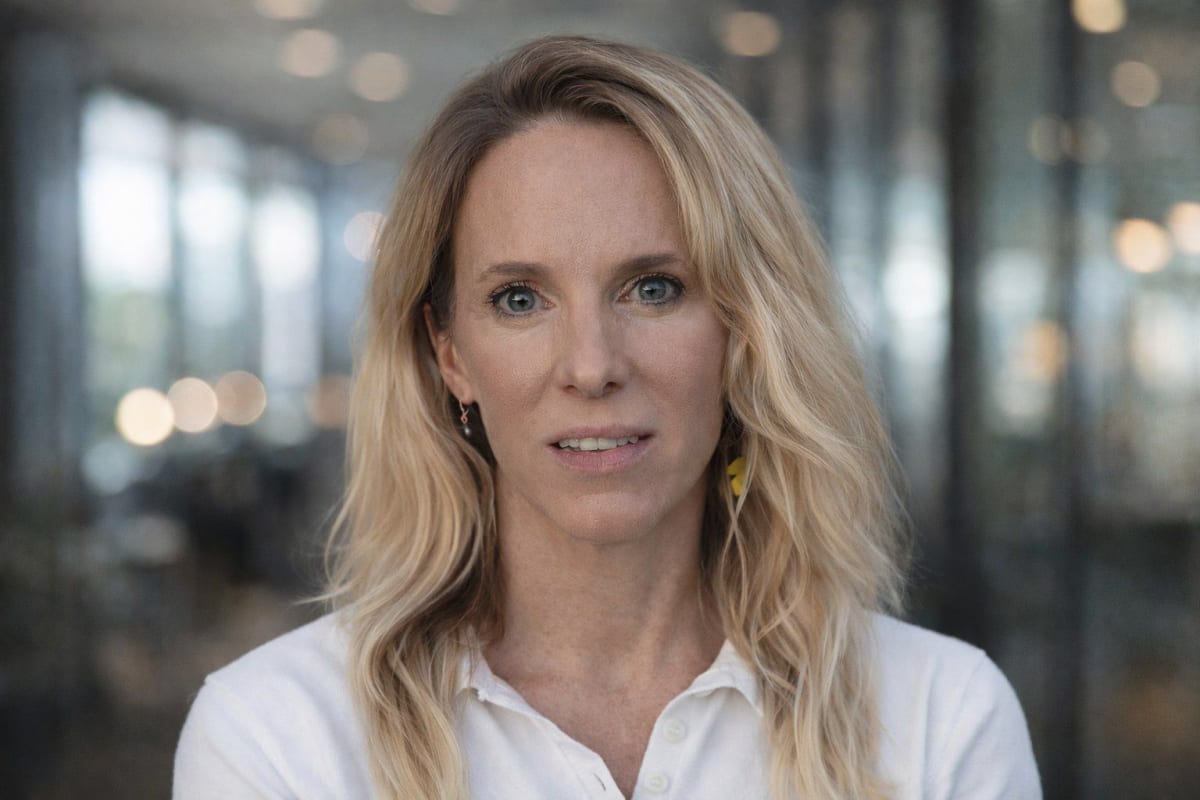
Liza is the founder of Punta Houses, with a background in real estate, construction, and tourism. After traveling across all continents and living as an expat in South America for over 12 years, she has developed a strong understanding of what international buyers are truly looking for. It is rarely just about a property — it is about lifestyle, location, and the right feeling. With a refined perspective on real estate and in-depth knowledge of the local market, Liza guides clients through every step of the buying process. Her approach is discreet, personal, and focused on finding the right match, with attention to detail and long-term value. She works with clients from around the world and communicates fluently in Dutch, English, Spanish, French, and German, ensuring a smooth and professional experience on an international level. For Liza, real estate is about more than transactions. It is about trust, insight, and creating opportunities that truly align with each client’s lifestyle and ambitions.

Explore Uruguay’s 2026 property market, including economic trends, investment benefits, potential risks, and the best locations for long-term real estate growth.

How long does it take to sell a property in Uruguay? The answer depends on pricing, location, presentation, paperwork, buyer profile, and strategy. This guide explains what really affects selling time in Uruguay and how owners can position their property to attract stronger buyers and sell with more confidence.