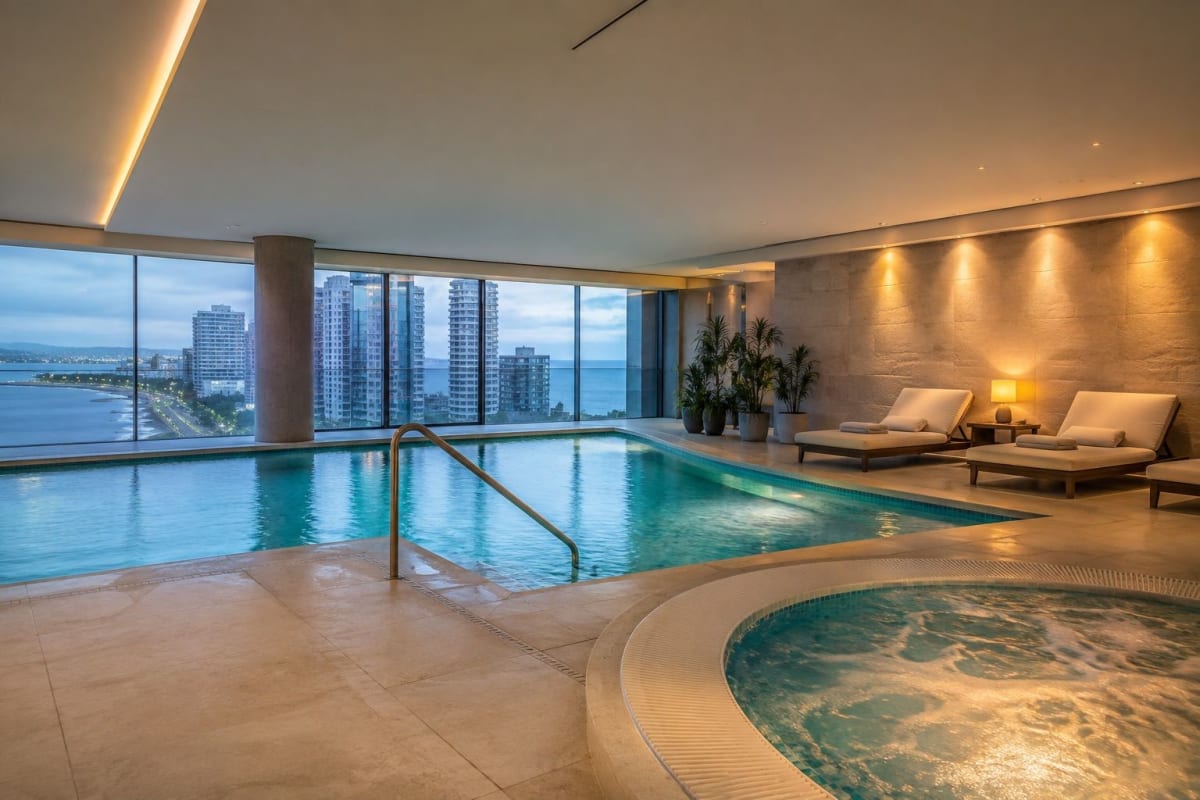
Punta del Este, Uruguay

BlogNoSeVende.jpg
Market News

Why Some Homes in Uruguay Stay for Sale for Years

Why do some homes in Uruguay stay on the market for years? From unrealistic pricing to weak presentation and unclear agency control, this blog explains what buyers notice — and what sellers can do differently.

Liza – Founder & Real Estate Advisor at Punta HousesBy Liza – Founder & Real Estate Advisor at Punta HousesApril 30, 202615 min read

In Uruguay, some homes do not stay for sale for years because they are bad properties. They stay for sale because the market never fully understands them.

That is an important difference.

A house can have charm, a good location, a large garden, sea views, privacy, solid construction or emotional value for the owner — and still not sell. Not because nobody wants property in Uruguay. Not because buyers are impossible. And not always because the asking price is completely irrational.

Often, the problem is more subtle.

The property is priced for one reality, photographed for another, described too vaguely, and shown to the wrong type of buyer. After a few months, it becomes “that house that has been online forever.” After a year, buyers start asking what is wrong with it. After several years, even a good property can begin to feel like a risk.

That is why time on the market matters.

According to the 2025 real estate market report, the average publication time for a property listed for sale in Uruguay was around three months. That does not mean every house should sell in three months. Luxury homes, rural properties, older coastal houses and unique estates can naturally take longer. But when a home remains listed for years, it usually means something is not aligned: price, presentation, documentation, buyer profile or market strategy.

For sellers, this article can save time, frustration and lost opportunities. For buyers browsing homes for sale in Uruguay, it can help you understand whether a long-listed home is a hidden opportunity — or a warning sign.

Why a house stays on the market in Uruguay

A property does not sell simply because it is available. It sells when the right buyer understands the value clearly enough to act.

This is especially true in Uruguay, where real estate is often emotional. Buyers are not only comparing square meters. They are comparing lifestyles: beach life in Punta del Este, year-round comfort in Maldonado, hillside views in Piriápolis, quiet coastal living in Ocean Park, or privacy in a countryside chacra.

That sounds romantic, but it creates a challenge. A property must explain itself.

A buyer looking from abroad may not understand why one neighborhood is active all year and another feels empty after summer. They may not know which roads are comfortable in winter, which areas are growing, which houses are easy to rent, or why two properties that look similar online can have completely different resale potential.

When a listing does not answer those questions, the buyer hesitates. And hesitation is where properties get stuck.

The market is active, but not automatic

Uruguay has real demand, especially in Montevideo, Maldonado, Punta del Este and surrounding coastal areas. InfoCasas reported that Maldonado represented 16% of sales demand on its portal in 2025, supported strongly by Punta del Este and its area of influence. The same market report showed that apartments dominated online sales demand, while houses represented a smaller share, which means houses often need more precise positioning to compete well.

This matters because many owners assume demand in Uruguay is enough.

It is not.

A well-priced one-bedroom apartment in a high-demand area may attract quick interest because the buyer profile is broad: investors, locals, retirees, foreigners, rental buyers. A large house with land, older construction or a very specific lifestyle may need a narrower buyer. That does not make it less valuable. It means the marketing has to be sharper.

A house in Punta del Este is not automatically easy to sell just because it is in Punta del Este. A house in Piriápolis is not automatically undervalued just because it is cheaper than Punta del Este. A chacra is not automatically a dream investment just because it offers privacy.

The property has to make sense to a real buyer with real alternatives.

A “stale listing” starts to lose trust

The first months of a listing are powerful. Buyers notice new properties. Agents talk about them. People compare them seriously. The property feels fresh.

But after too much time online, the psychology changes.

Scherm­afbeelding 2026-04-30 om 10.06.16 AM.png

Sometimes those assumptions are unfair. The house may be perfectly sellable. The seller may be reasonable. The legal documents may be clean. But once the market starts to see the listing as stale, the property has to work harder to regain trust.

That is why simply “keeping it online” is not a strategy.

A home that has been listed for a long time often needs a relaunch: new valuation, new photos, new description, new buyer targeting, and sometimes a new price. For owners who want to sell property in Uruguay, the question is not only “What is my house worth?” It is also “How will the market understand my house?”

1. The price is not wrong — the story behind the price is wrong

Price is usually the first thing people blame when a property does not sell. And yes, many homes stay on the market because they are overpriced.

But the more useful answer is this: the property’s price is not supported by a convincing story.

A buyer does not look at your home in isolation. They compare it with every other option in the same budget. For USD 350,000, what else can they buy? A newer home? A better location? Less maintenance? A smaller house but closer to the beach? An apartment with rental income? Land where they can build exactly what they want?

This is where many sellers lose the buyer.

The owner sees what they invested. The buyer sees what they can choose.

The owner remembers the renovation. The buyer notices the bathrooms are still dated.

The owner values privacy. The buyer worries about distance from services.

The owner says, “But it has a large plot.” The buyer asks, “How much does it cost to maintain?”

Both sides may be rational. They are just looking at different things.

The seller’s price and the buyer’s comparison are different

Many sellers price from the past. Buyers price from the present.

A seller may think:

“I paid this amount, added improvements, and waited several years. So now it should be worth more.”

A buyer thinks:

“For this budget, what is the best property I can buy today?”

That difference is everything.

In Uruguay, this becomes even more important because asking prices can sometimes be aspirational. A neighbor lists high, so another owner lists high. A property sits online, but its price becomes the new reference. Then another seller uses that unsold listing as proof of value.

But an asking price is not a sale price.

A serious valuation should consider location, micro-location, condition, land size, construction quality, layout, orientation, maintenance needs, legal clarity, current buyer demand and realistic comparable sales. For Punta del Este real estate, micro-location can change everything: Mansa or Brava, close to services or isolated, sea view or no view, summer appeal or year-round usability.

The best price is not always the lowest price. It is the price that buyers can believe.

The first 90 days matter more than most owners think

A common phrase in Uruguay is: “I am not in a hurry to sell.”

That is completely valid. Nobody should be forced into a bad sale. But there is a problem: the market often reads “not in a hurry” as “not seriously priced.”

The first 90 days are usually when a property gets its cleanest attention. Buyers have not dismissed it yet. Agents still remember it. The listing feels current. If the home launches at a price that feels too ambitious, that valuable first window may be wasted.

Later, the owner may reduce the price, but the market may no longer react with the same energy. Buyers who saw it six months ago do not always come back. Agents may stop mentioning it. The listing remains visible, but not alive.

A better strategy is to launch with discipline.

Before listing, a seller should ask:

Scherm­afbeelding 2026-04-30 om 10.06.54 AM.png

A property does not need to be cheap. It needs to be credible from the beginning.

2. The property is marketed to the wrong buyer

A house can be excellent and still fail if it is speaking to the wrong audience.

This happens often in Uruguay because properties can appeal to very different buyer groups. A local family, an Argentine summer buyer, a Brazilian investor, a European retiree and a North American remote worker may all look at Uruguay — but they do not buy for the same reasons.

One buyer wants rental return. Another wants peace. Another wants a base for summer. Another wants security and services. Another wants land, animals, a garden and no close neighbors.

If the listing says only “beautiful house in excellent location,” it does not help any of them enough.

Good marketing starts with a sharper question: who would be happiest owning this property?

Punta del Este is not one single market

Many people speak about Punta del Este as if it were one market. It is not.

A modern apartment near the port speaks to a different buyer than a house in Beverly Hills, a beachfront apartment on Playa Brava, a family home near San Rafael, or a quiet property toward La Barra or Manantiales. Even within Punta del Este, the buyer psychology changes street by street.

Some areas are about prestige. Others are about rental liquidity. Others are about year-round comfort. Others are about summer lifestyle.

The same applies outside Punta del Este. Piriápolis real estate attracts buyers who may want mountain views, a more relaxed coastal atmosphere and better value per square meter. Ocean Park can appeal to people looking for nature, beach proximity and a quieter lifestyle. Maldonado city attracts a different year-round buyer profile. Chacras near Laguna del Sauce or José Ignacio require a buyer who understands privacy, access, land management and maintenance.

A listing that ignores these differences becomes too flat.

The property should not only say where it is. It should explain what kind of life that location offers.

Chacras and coastal houses need a different language

A rural property or coastal house cannot be marketed like a standard apartment.

For a chacra, the buyer may want to know about access roads, water, electricity, internet, fencing, soil, trees, distance to services, caretaker options, security, maintenance and what can legally be built or expanded.

For a coastal house, the buyer may ask different questions: How far is the beach really? Is the area active in winter? Is there humidity? What is the wind exposure? Is the house protected? Can it be rented in summer? Is it easy to close and leave for several months?

These are not small details. They shape the decision.

A foreign buyer may love a photo of a beautiful garden, but then wonder who maintains it when they are abroad. They may love a sea view, but worry about salt, wind and upkeep. They may love privacy, but hesitate if the road feels too remote.

The listing should not hide these realities. It should explain them intelligently.

That is what builds trust.

For sellers, this is where a good real estate agent in Uruguay adds value: not by repeating that the house is beautiful, but by translating the property into the language of the right buyer.

3. The listing looks cheaper than the property really is

Some homes stay for sale because the presentation makes them look less valuable than they are.

This is one of the most painful mistakes, because it is avoidable.

A property may have good construction, generous rooms, beautiful light, a strong location and excellent potential. But if the photos are dark, the rooms are messy, the angles are confusing and the description is generic, buyers will judge the property as lower quality.

Online, presentation is not decoration. It is the first showing.

International buyers often decide whether to contact an agent before they ever visit Uruguay. They may be comparing twenty homes from their laptop in Madrid, Miami, Buenos Aires, São Paulo or Amsterdam. If one property has clear photos, a floor plan, drone context and a useful description, while another has ten random images and no real explanation, the better-presented property wins attention.

Even if the second home is better in real life.

Photos are not decoration — they are the first visit

Good real estate photography should answer questions.

It should show how the home flows. Where the living room connects to the terrace. How natural light enters. Whether the bedrooms feel private. How the garden relates to the house. What the view really looks like. How close the neighbors are. Whether the pool area is usable. Whether the property feels maintained.

Bad photos create doubt.

A dark hallway, a half-visible bathroom, closed curtains, cluttered furniture, strange angles or missing exterior shots make buyers suspicious. Not always consciously, but enough to move on.

For premium homes, drone photography can be especially useful. In Uruguay, context matters. Aerial images can show distance to the beach, surrounding nature, access roads, nearby houses, land shape and privacy. For coastal and countryside properties, this can be the difference between curiosity and serious interest.

A simple rule: if the price is premium, the presentation must feel premium.

Otherwise, buyers do not think, “The photos are bad.” They think, “The house is overpriced.”

A good description removes doubt before the visit

Many property descriptions are too emotional and not useful enough.

They say:

“Unique opportunity.” “Excellent location.” “Dream house.” “Must see.” “Ideal for investment.”

Those phrases do not sell a property. Information does.

A strong listing description should answer the buyer’s silent questions before they ask them.

Scherm­afbeelding 2026-04-30 om 10.07.28 AM.png

This does not mean writing a long sales speech. It means giving buyers the clarity they need to take the next step.

At Punta Houses, this is where listings should feel like guided advice, not just property advertising. A buyer should finish reading and understand not only what the property is, but why it makes sense.

4. The practical questions are answered too late

Some properties do not lose buyers during the first visit. They lose buyers after the first visit.

The buyer likes the house. They ask for documents. They ask about costs. They ask about title, taxes, maintenance, building permissions, boundaries, rental potential or whether the house has any known issues.

Then everything slows down.

The owner needs time to find papers. The agent does not have answers. The buyer starts waiting. Doubt enters. Another property appears. Momentum disappears.

This is very common, and it is very damaging.

Uruguay has a structured legal system for real estate transactions. Deloitte Legal notes that Uruguay has no restrictions on foreign ownership of real estate, and that residents and non-residents can purchase property, while real estate transactions are carried out through public deeds and registration in the public land registry. The official DGR process includes registration steps for transactions such as purchase agreements, promises of sale and mortgages.

That legal clarity is one of Uruguay’s advantages. But the seller still needs to be prepared.

Buyers, especially foreign buyers, want confidence. They may not know how an escribano works. They may not know what the ITP tax is. They may not know which documents matter. They may be comfortable with Uruguay, but they still need the process to feel organized.

The official DGI page explains that ITP, the property transfer tax, applies to real estate transfers and is generally calculated using the official real value set by Catastro; for paid transactions, the rate is 2% for the seller and 2% for the buyer.

A serious seller should therefore prepare a buyer confidence file before going to market. This could include:

Scherm­afbeelding 2026-04-30 om 10.07.53 AM.png

A seller does not need to answer every legal question personally. That is the role of the escribano. But a prepared seller creates confidence, and confidence keeps buyers moving.

This is especially important for owners whose homes have already been online for a long time. If the property has been listed for years, buyers will already be cautious. The best way to fight that caution is with clarity.

Not pressure. Not vague optimism. Clarity.

5. The home needs repositioning, not just a price reduction

When a property does not sell, many people think there are only two choices: wait or lower the price.

Sometimes a price reduction is necessary. But it is not always enough.

If the photos are weak, a lower price may still not create trust. If the description is vague, a lower price may still not explain the opportunity. If the wrong buyer is being targeted, a lower price may attract bargain hunters instead of serious buyers. If the documentation is unclear, a lower price may not remove the fear.

A property that has been stuck for a long time often needs repositioning.

Repositioning means looking at the property as if it were being launched again, not simply discounted.

That includes:

Scherm­afbeelding 2026-04-30 om 10.08.25 AM.png

The goal is not to exaggerate. The goal is to make the value easier to understand.

For example, an older house in Piriápolis with mountain views may not compete well as a “modern luxury home.” But it may compete beautifully as a character property with views, space, privacy and renovation potential.

A coastal home in Ocean Park may not appeal to someone who wants nightlife and restaurants nearby. But it may be perfect for a buyer who wants nature, quiet, beach access and a slower rhythm.

A chacra near Maldonado may look expensive to someone comparing it with city houses. But to the right buyer, privacy, land, trees, guest space and distance from noise may be the entire point.

That is repositioning.

It asks: what is this property really good at?

Then it builds the sale around that truth.

For sellers, the most dangerous mistake is to keep doing the same thing and hope for a different result. If a property has had little serious movement after months or years, the market has already given feedback. The only question is whether the strategy will listen.

A strong relaunch might include a new valuation, professional photography, drone images, a sharper description, better internal linking, clearer documentation, new buyer targeting and a more credible price. Owners can start by requesting a property valuation in Uruguay or contacting Punta Houses for a listing review.

Because in many cases, the home is not unsellable.

It has simply never been positioned correctly.

If your property in Uruguay has been listed for months without serious movement, the question may not be whether it can sell. The better question is whether it has been shown to the market in the right way. For a realistic valuation, clearer positioning or a fresh listing strategy, contact Punta Houses.

Frequently Asked Questions

Yes. Several months can be normal, especially for houses, luxury homes, rural properties or unique listings with a smaller buyer pool. But if a home stays listed for years, it usually means there is a mismatch between price, presentation, buyer expectations, documentation or positioning.

No. A long-listed property is not always a bad property. Sometimes it is overpriced. Sometimes it has poor photos. Sometimes it is marketed to the wrong buyer. Sometimes the owner is not in a hurry. For buyers, it can be an opportunity — but only if the legal, practical and pricing details make sense.

The biggest mistake is pricing the property based on emotion or past investment instead of current buyer comparison. Buyers do not pay for memories, effort or what the owner hopes to recover. They pay for today’s value compared with other available homes.

Start with a realistic valuation, strong photography, a clear description, prepared documentation and a defined buyer profile. The goal is to remove doubt before the buyer even visits. If the property has already been online for a long time, consider a full relaunch rather than only a small price reduction.

Liza – Founder & Real Estate Advisor at Punta Houses
By

Liza – Founder & Real Estate Advisor at Punta Houses

Liza is the founder of Punta Houses, with a background in real estate, construction, and tourism. After traveling across all continents and living as an expat in South America for over 12 years, she has developed a strong understanding of what international buyers are truly looking for. It is rarely just about a property — it is about lifestyle, location, and the right feeling. With a refined perspective on real estate and in-depth knowledge of the local market, Liza guides clients through every step of the buying process. Her approach is discreet, personal, and focused on finding the right match, with attention to detail and long-term value. She works with clients from around the world and communicates fluently in Dutch, English, Spanish, French, and German, ensuring a smooth and professional experience on an international level. For Liza, real estate is about more than transactions. It is about trust, insight, and creating opportunities that truly align with each client’s lifestyle and ambitions.