
La Pataia
Living in La Pataia, Maldonado
The name La Pataia comes from an indigenous language spoken by the original inhabitants of southern South America — and it means, according to the sources, "valley of good wood." The valley in question sits north of the Ruta Interbalnearia between Punta Ballena and Maldonado, sheltered by the Sierra de la Ballena on one side and opening toward the rolling Maldonado countryside on the other. The sierra behind it was known by those same original inhabitants as the Sierra de los Demonios — for the inexplicable magnetic forces that the local geology generates, forces that still confuse compass readings and, according to at least one real estate agent who has been operating in the zone for decades, occasionally disorient first-time visitors who arrive expecting flat coastal land and find themselves instead in a landscape that feels improbably wild given its proximity to one of South America's most glamorous beach resorts.
La Pataia is approximately 15 minutes by car from Solanas beach, 20 minutes from the Ruta Interbalnearia's full service corridor, and 25 minutes from the private schools of Punta del Este. It is, by the arithmetic of distance, a rural zone that happens to be extremely close to the coast. By the arithmetic of lifestyle, it is something more specific: the address you choose when you have decided that the chacra is the point, and the beach and the schools are the supporting cast.
The Zone and What It Is
La Pataia is a zona chacrera — a rural zone of chacras — rather than a suburb or a beach community. Its roads are caminos vecinales, some paved and some balasto, maintained by the Intendencia de Maldonado and in good condition year-round. Properties are typically accessed via Camino Benito Nardone and the network of rural tracks that branch from it, with dual access possible from both Ruta 12 (at kilometre 5, turning and continuing approximately a kilometre) and from the Ruta Interbalnearia corridor. The zone covers a substantial area of productive rolling land between the sierra and the coastal strip, and it has been accumulating serious buyers — Uruguayan, Argentine, and increasingly European — for two decades.
What draws them is the combination that the van Bevern real estate agency, which has been selling properties in this zone for years, describes as the resolution of a false dilemma: the belief that buying near the coast means buying in a beach community, and that rural life requires remoteness. In La Pataia, these are not mutually exclusive. The Portezuelo Bay beaches are 15 minutes. The airport at Laguna del Sauce — which serves Punta del Este with national and charter flights — is approximately the same distance. Casapueblo and the Arboretum Lussich are on the way to the coast. Maldonado's full urban infrastructure — supermarkets, hospitals, banks, schools — is equally accessible.
The Land: What Grows Here
The soils in the La Pataia zone are productive and varied, with the CONEAT soil productivity indices that characterise this part of Maldonado supporting multiple agricultural uses simultaneously. Olive production has established itself in the zone — small-scale plantations on several properties already produce oil harvested and pressed locally, following the model that has made the Maldonado department's Route du Vin and Route de l'Olive corridors increasingly interesting to agricultural buyers from Europe. Organic vegetable production is active on neighbouring properties. Fruit trees — figs, citrus, stone fruit — are common in the established chacra gardens.
Water is not a constraint. Properties in La Pataia typically include tajamares — farm ponds constructed to collect runoff — and access to well water. Several properties have natural streams on their boundaries; others border or overlook the Laguna del Sauce protected reserve, whose watershed supports the surrounding properties' water security in ways that coastal land cannot replicate. The combination of reliable water, productive soil, Atlantic-influenced climate, and distance from urban contamination makes La Pataia one of the more practical zones in Uruguay for a serious small-scale agricultural project rather than simply a rural lifestyle purchase.
Horse Country
La Pataia is established equestrian territory. The most visible operation in the zone is Haras Witzar — an Arabian horse stud farm of international standing, located on 7 hectares at the foot of the Sierra de la Ballena, where bloodlines have been imported internationally since its founding in 2002. The haras has produced champions, exported horses for endurance racing, and operates from a property that combines a quality house, riding arena, and paddocks with native forest and centenarian taperas — the ruins of original rural structures more than 150 years old. It is not the only operation of its kind in the zone; La Pataia's network of caminos vecinales is travelled as much by horses as by cars, and the culture of horsemanship here is daily rather than recreational.
For buyers interested in equestrian operations — whether continuation of an existing haras, conversion of a productive chacra into a horse property, or simply a rural residence where horses can be kept on the land — La Pataia offers the paddock space, the water, the climate, and the community context that the coastal addresses cannot. Several listings in the zone include existing caballerizas and galpones, which meaningfully reduces the cost and time of establishing a working equestrian property from scratch.
The Landscape
The physical character of La Pataia is worth describing directly, because it is not what most people expect when they hear "near Punta del Este." This is not flat coastal scrub. The valley sits at the base of the Sierra de la Ballena, and the views from elevated positions within the zone — across the valley floor, toward the laguna, and with the sierras as a backdrop — are the kind of views that take longer to see on a property visit and then do not leave. The light is different here than on the coast: less reflected, more golden in the late afternoon, with the hills catching the last sun wh
Frequently Asked Questions
La Pataia is a rural zone north of the Ruta Interbalnearia between Punta Ballena and Maldonado, accessed primarily via Camino Benito Nardone and the network of caminos vecinales that branch from it. It has dual road access from both the Ruta Interbalnearia and Ruta 12 (at km 5). The zone is approximately 15 minutes from Solanas beach, 20 minutes from Maldonado's urban centre, 25 minutes from the private schools of Punta del Este, and a similar distance from Laguna del Sauce airport.
La Pataia is a name derived from an indigenous language spoken by the original inhabitants of southern South America, meaning 'valley of good wood' — a reference to the forested character of the sierra valley in which the zone sits. The Sierra de la Ballena that shelters the zone was known by the same indigenous inhabitants as the Sierra de los Demonios, for the inexplicable magnetic forces generated by the local geology, which still affect compass readings in parts of the zone today.
La Pataia is exclusively a rural property market — chacras, estancias, haras, and working farms. Properties range from 2-hectare plots without construction (entry-level, build-to-brief) through established 5-hectare family chacras with houses, pools, and caretaker infrastructure, up to large-scale estates of 10–20+ hectares with significant main houses, guest accommodation, working farm buildings, and equestrian facilities. There are no apartment buildings or beach-style developments in La Pataia.
Yes — it is one of the primary equestrian zones in the Maldonado department. The most established operation is Haras Witzar, an Arabian horse stud of international standing founded in 2002, which has exported horses for endurance racing and produced category champions. Multiple other properties in the zone include caballerizas and paddocks. The caminos vecinales of La Pataia are routinely used for riding. The culture of horsemanship here is established and daily rather than recreational.
Yes. The soils in the zone support olive growing, organic vegetable production, and fruit orchards — all of which are already active on properties in La Pataia. The Atlantic-influenced climate of the Maldonado department, similar to the microclimate that makes Bodega Garzón's wines internationally competitive, is well suited to Mediterranean agricultural products. Several properties in the zone already have established olive plantations producing oil locally. Water security, via tajamares and well water, is generally good throughout the zone.
Woodside School in Cantegril and St. JosephMary College in Punta del Este are approximately 25 minutes by car from La Pataia via the Ruta Interbalnearia. This makes the zone genuinely compatible with year-round family life — the school run is comparable to suburban commutes in many European cities, and it is significantly shorter than the distances rural families accept in most countries when choosing to live outside urban centres.
Entry-level plots of 2–3 hectares without construction begin at approximately $55,000–$120,000. Established 5-hectare chacras with quality houses, pools, and full caretaker infrastructure trade in the $300,000–$600,000 range depending on construction quality, water features, and garden maturity. Larger properties of 10–20 hectares with significant main houses, guest accommodation, and working farm infrastructure are typically priced from $600,000 upward, with the most significant estates trading at $1,000,000 and above. Land on Camino Benito Nardone has been offered in 5-hectare fractions at approximately $160,000 per fraction for premium positions.
Yes — it is one of the more naturally suited zones in the Maldonado department for genuine year-round rural life. The combination of road access maintained by the Intendencia de Maldonado, proximity to Maldonado's urban services, the private school commute to Punta del Este, and the year-round beach access at Portezuelo and Solanas makes the practical requirements of permanent living here entirely manageable. Properties with gas central heating, wood-burning stoves, and air conditioning — common in the zone's better-built chacras — are comfortable in both January and July.
Genuine Rural Character, Close to Everything
La Pataia offers the land, the quiet, and the open sky of the Uruguayan campo — with Solanas beach 15 minutes away, the private schools of Punta del Este 25 minutes by car, and Laguna del Sauce airport just beyond that. It is the rare zone where rural and coastal life are not a trade-off.
The Sierra de la Ballena & Panoramic Views
La Pataia sits in the valley formed by the Sierra de la Ballena — known to the region's original inhabitants as the Sierra de los Demonios, for its inexplicable magnetic forces. The hills frame the landscape and provide elevated views across the valley and toward the Laguna del Sauce that are unavailable anywhere on the flat coastal strip.
Horse Country: Haras & Equestrian Estates
La Pataia is one of the primary equestrian zones in the Maldonado department — with established haras including Arabian horse operations of international standing, riding arenas, paddocks, and a culture of horsemanship that has been part of the zone's identity for decades.
Productive Land at Accessible Prices
Chacras in La Pataia range from 2 to 20+ hectares, priced significantly below equivalent rural land in Europe while offering soil quality, water availability, and a climate suited to olive growing, organic vegetable production, and equestrian use.
Between the Interbalnearia & Ruta 12
La Pataia is accessible from both the Ruta Interbalnearia and Ruta 12 — giving it dual road access to Punta Ballena, Maldonado, Punta del Este, and the Laguna del Sauce corridor without committing to a single route in or out.
Portezuelo Bay at Walking Distance from the Zone
Portezuelo Bay — kilometres of calm, family-friendly saltwater beach popular for its moderate surf and accessible shoreline — is the nearest coastal point to La Pataia, approximately 15 minutes by car through Punta Ballena.
Private Schools Within Reach
Woodside School in Cantegril and St. JosephMary College in Punta del Este are 25 minutes from La Pataia — a commute that makes the zone genuinely compatible with year-round family life without proximity to an urban centre.

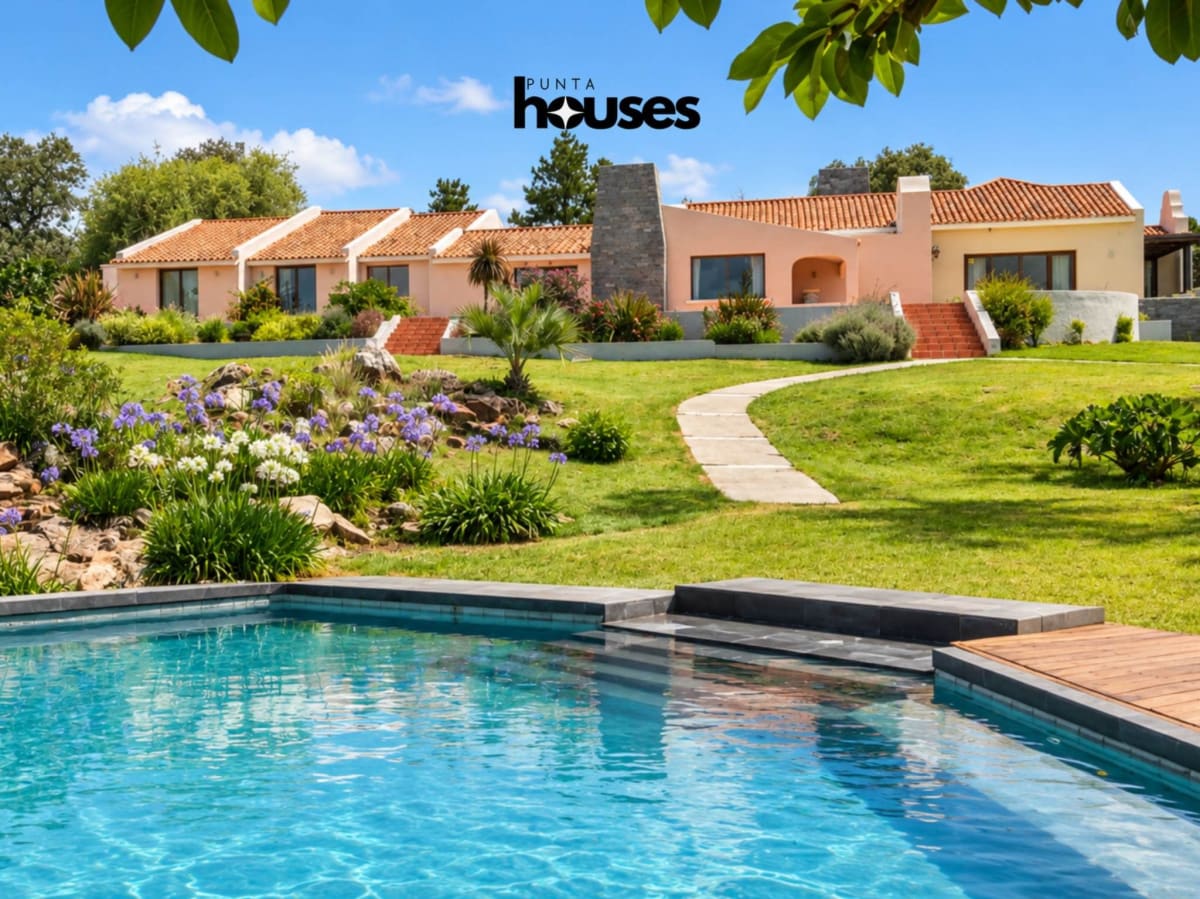
Luxury Chacra with Panoramic Lagoon Views, Spa and Guest Houses

Luxury Lakefront Chacra in Club del Lago

Estate with Lagoon Views and 6 Hectares

Exceptional Elevated Beachfront Plot with 90 m of Beach Frontage

First-Row Beachfront Estate of 1.8 Hectares

3-Hectare Beachfront Development Opportunity near Punta del Este
Inquire for Price
Interested in this area?
Our team knows every corner of this neighborhood. Let us help you find the right property.