Lugano
Living in Lugano, Punta del Este
Punta del Este has no shortage of prestigious addresses — the Mansa rambla, the Brava towers, the Peninsula. What it has in shorter supply is the kind of neighbourhood where you can have a genuinely grand house, beneath properly old trees, within five minutes' walk of the beach and the city's best restaurants, and still feel as though you are nowhere near any of it. Lugano is that neighbourhood.
It is not a neighbourhood that announces itself. The streets are quiet, the plots are large, and the canopy of mature pines, eucalyptus, and broadleaf trees that has built up over four decades of growth gives the area a density of green that is simply not replicable by any new development. The houses — the majority built in the 1980s and 1990s, when Punta del Este's expansion into its residential interior was in full momentum — are substantial: four, five, six bedrooms, private pools, gardens that take time to cross, tiled roofs of the kind that signalled quality construction in their era. Lugano is the neighbourhood that the people who built Punta del Este's golden-age residential layer chose for themselves.
The Boundaries That Define It
Lugano's geography is what makes it work. To the west, Avenida Roosevelt — the city's main commercial artery — brings Punta Shopping, banks, supermarkets, and the full urban infrastructure of the corridor within a few minutes' walk. To the south, Avenida Pedragosa Sierra forms the boundary — and what a boundary it is. Described by the city's own real estate and hospitality community as Punta del Este's most exclusive gastronomic avenue, Pedragosa Sierra runs from Bulevar Artigas to the Convention Centre district and is lined from end to end with restaurants covering the full spectrum from casual craft-beer bars to white-tablecloth institutions. La Bourgogne, the French fine-dining landmark belonging to the international Relais & Châteaux group, has been a fixture on Pedragosa Sierra for over 25 years. Floreal, one of the city's most respected contemporary restaurants, is on the same avenue. Music venues, wine bars, breakfast cafés — Pedragosa Sierra operates year-round, not just in January, which is what elevates it from a seasonal strip to a genuine neighbourhood amenity.
To the east, the neighbourhood borders Marly — Punta del Este's well-established upper-middle class residential zone — and shares its character of tree-lined streets and quality housing stock. The beach is reachable on foot: Playa Brava is a short walk south through the residential streets past Pedragosa Sierra, and the Mansa rambla is not much further. This is genuinely walkable distance for permanent residents who want to get to the water without driving.
Club del Bosque: The Neighbourhood's Social Core
Every good residential neighbourhood has an institution that holds it together. In Lugano, that institution is Club del Bosque — a tennis and padel club established beneath the pines a few blocks east of Roosevelt at Parada 6, at the corner of Mónaco and Marne. Seven clay courts and one hard court sit in a setting of mature forest that gives the club a character entirely distinct from more manicured facilities. There is a social club, a restaurant open to members and their guests, and an events venue that has become a quiet fixture of Lugano's social life through the summer season and increasingly through the year.
The club's position within the neighbourhood rather than on its edge makes a difference: Club del Bosque is a place that residents walk to, which changes its role from a facility into a meeting point. In a neighbourhood where the houses are set back behind gardens and the streets are quiet enough to carry birdsong year-round, having a social anchor that generates foot traffic without requiring a car is the kind of detail that matters more than it sounds.
A Neighbourhood With Historical Neighbours
Lugano sits within a wider residential zone that carries more history than most visitors ever discover. Immediately to the east, Cantegril — the neighbourhood founded in the 1940s around Mauricio Litman's country club project — preserves some of the most significant private architecture of Punta del Este's mid-century golden age, including La Azotea de Haedo, the former summer residence where Che Guevara, Pablo Neruda, and Perón were all guests. The proximity to Cantegril reinforces Lugano's own residential character: these are neighbouring zones that share the same values of large plots, established trees, and the kind of quiet that only comes from decades of settled residential use. Cantegril's golf course and country club are minutes away, adding to the sporting and social infrastructure that Lugano residents access without needing to leave the broader area.
The Property: What Lugano Offers Buyers
The residential logic of Lugano is straightforward and genuinely compelling. The neighbourhood offers large houses — most built to the standards of an era when residential construction was taken seriously, with solid structures, generous room dimensions, and garden plots that would be prohibitively expensive to acquire and develop today — at prices per square metre that reflect house values rather than the beachfront tower premium.
A substantial 4-bedroom house with pool and garden in Lugano can be acquired at a price that would buy a fraction of the equivalent apartment space on the Mansa or Brava. The trade-off is no direct sea views and no building amenities — there are no gyms or concierge desks here. What exists instead is space, privacy, established greenery, and the kind of residential quality that takes decades to develop and cannot be built from scratch.
The market in Lugano skews heavily toward houses rather than apartments — this is a single-family residential neighbourhood, not a tower district, and that is unlikely to change given the established character of the area. Properties range from well-maintained 1980s originals in need of cosmetic updating — representing the entry point and the best renovation opportunity — through fully refurbished homes with modern kitchens and updated bathrooms on their original generous footprints, up to the larger mansion-scale properties that periodically come to market and represent some of the most significant residential real estate in this part of the city. Seasonal rental demand for large houses in Lugano is strong: families who want space, a pool, and a quiet neighbourhood within walking distance of everything are exactly the summer rental profile that the neighbourhood attracts.
Who Lives in Lugano
Lugano's permanent population is a mix that reflects the neighbourhood's particular appeal: established Uruguayan and Argentine families who have been in these houses for a generation and have no intention of leaving; buyers who looked at Marly, at Cantegril, and at the Mansa and decided that the combination of size, trees, and central location that Lugano offers could not be matched elsewhere; and an increasing number of year-round residents — both Uruguayan and foreign — who understand that the beach-plus-city lifestyle the neighbourhood enables is more practically sustainable than either the tower-living of the rambla or the seclusion of the more distant residential zones.
What connects most of them is a preference for houses over apartments and for green over concrete — and the understanding that in Punta del Este, those preferences have a price that Lugano, despite its quality and location, has historically undercharged.
Explore current listings in Lugano at Punta del Este Houses or use our Neighborhood Matcher to compare Lugano with other residential areas across Punta del Este.
Frequently Asked Questions
Lugano sits in a central residential position between Avenida Roosevelt to the north — the city's main commercial artery — and Avenida Pedragosa Sierra to the south. It borders Marly to the east and is within easy walking distance of Punta Shopping, both Playa Brava and Playa Mansa, and the full range of services along Roosevelt. Despite this central position, the neighbourhood's interior streets are quiet and heavily treed, giving it a secluded feel entirely at odds with how close it is to everything.
Lugano is almost exclusively a single-family house neighbourhood, with the majority of properties built in the 1980s and 1990s. Houses typically have 4–6 bedrooms, private pools, and substantial garden plots under mature trees. The range runs from well-maintained originals in need of cosmetic updating — offering the best renovation opportunity — through fully refurbished homes on generous footprints, up to larger mansion-scale properties. There are very few apartment buildings in Lugano, which distinguishes it from most of the broader Punta del Este residential market.
Avenida Pedragosa Sierra is Punta del Este's most celebrated gastronomic avenue — a strip running from Bulevar Artigas to the Convention Centre area that is lined with restaurants, bars, and cafés covering the full range from casual to Relais & Châteaux fine dining. La Bourgogne, one of the top French restaurants in South America, has been a fixture here for over 25 years. The avenue operates year-round rather than seasonally, which makes it a genuine daily amenity for Lugano residents — the southern boundary of the neighbourhood is essentially a world-class restaurant strip.
La Azotea de Haedo is the former summer residence of Eduardo Víctor Haedo, President of Uruguay's National Governing Council in the early 1960s. Located in Lugano, the house served as a gathering place for some of the most significant cultural and political figures of the mid-twentieth century — Pablo Neruda, Alfonsina Storni, Juan Domingo Perón, Liza Minnelli, and Che Guevara among them. The famous August 1961 encounter between Guevara and Haedo — where the two men drank mate during the Inter-American Economic Conference — took place here. The house is now a museum and cultural centre open to the public, hosting exhibitions and concerts through the summer.
Grand Houses on Large Plots
Lugano is defined by substantial residences from the 1980s and 1990s — many with 4–6 bedrooms, private pools, and generous garden plots under a canopy of old-growth trees that took decades to reach their current scale.
Perfectly Central, Completely Quiet
Bordered by Roosevelt to the east and Pedragosa Sierra to the south, Lugano is within walking distance of Punta Shopping, both beaches, and the city's finest restaurants — yet its tree-lined interior streets feel entirely removed from the bustle.
Pedragosa Sierra on Your Doorstep
Avenida Pedragosa Sierra — Punta del Este's most celebrated gastronomic avenue, home to La Bourgogne, Floreal, and dozens of restaurants from casual to Relais & Châteaux — forms the southern boundary of Lugano.
Club del Bosque
The established tennis and padel club is located within the neighbourhood, with seven clay courts, a hard court, a social club, and an events venue set beneath the pines — a genuine community anchor.
Walk to Punta Shopping
Punta Shopping — Punta del Este's main mall with Tienda Inglesa, cinemas, restaurants, and a full retail offer — is immediately adjacent to Lugano's northern boundary on Roosevelt.
Old Trees & Garden Character
Lugano's streets are canopied by mature pines, eucalyptus, and broadleaf trees planted alongside the original houses — a green density that gives the neighbourhood a permanence and scale that newer developments cannot replicate.
High-End Houses at Below-Peninsula Prices
Large, high-quality houses in Lugano offer exceptional value compared to Mansa or Brava apartments — more space, more garden, and a prestigious residential address at a price per square metre that reflects houses rather than beachfront towers.

Designer 4 BDR Residence at Fendi Château
Inquire for Price

Exclusive Residence Laguna Poseidon (312)

Renovated Apartment with Ocean Views
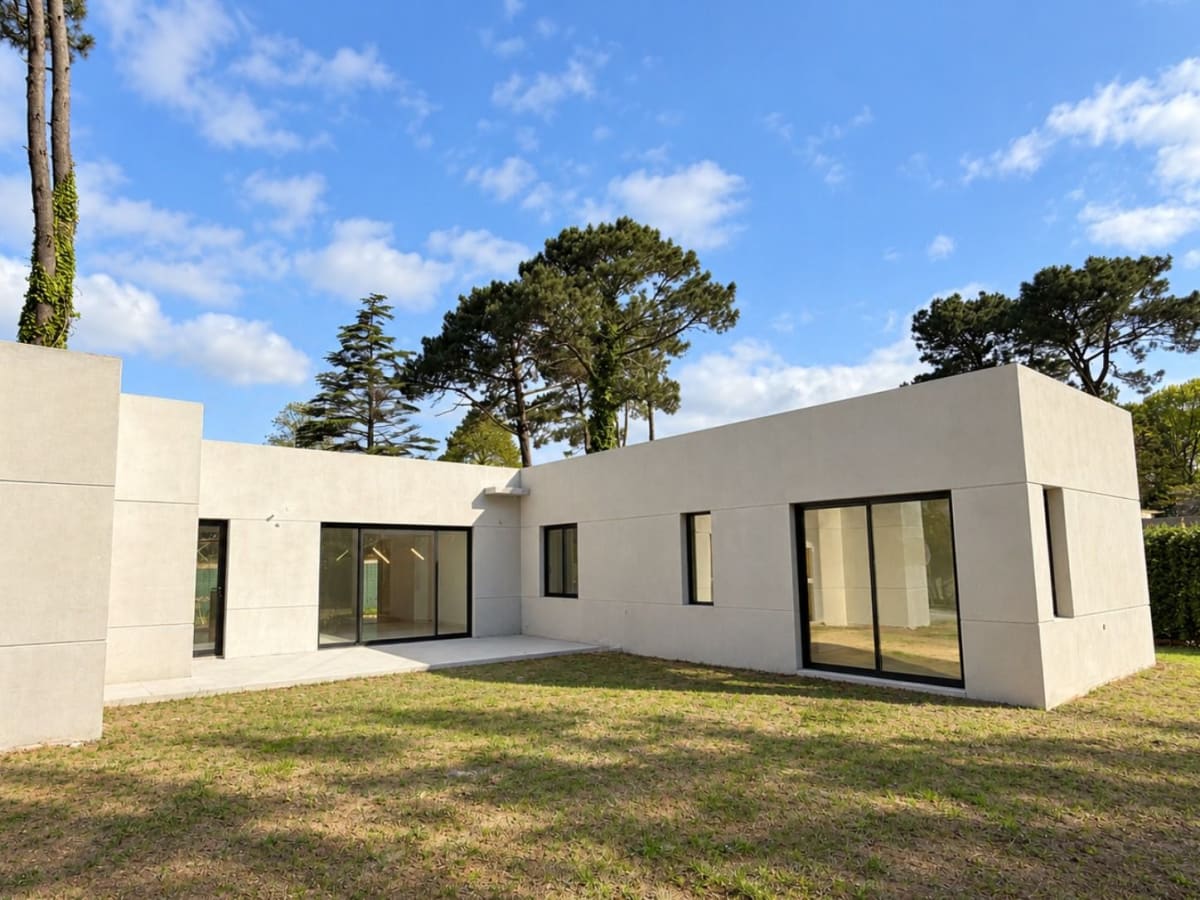
Brand-New 3-Bedroom Home with Private Garden
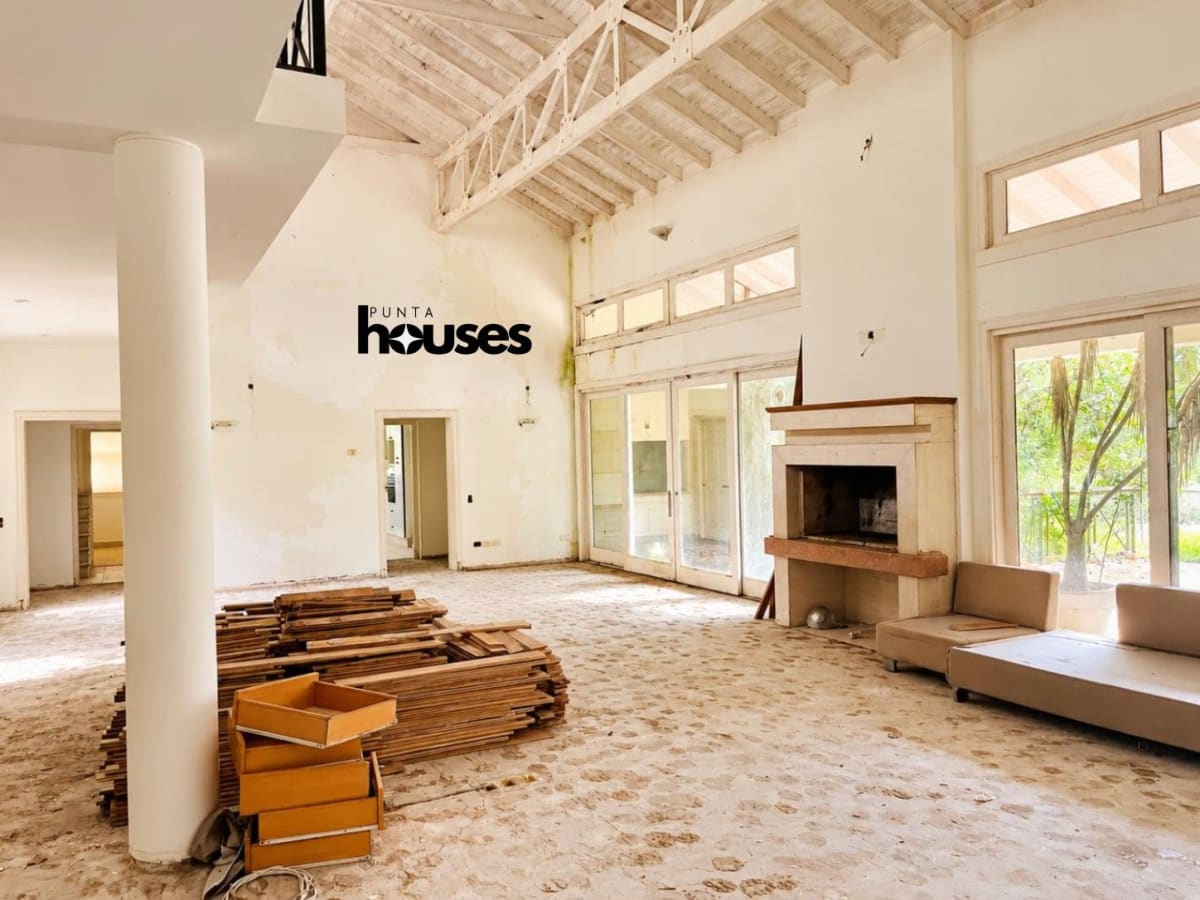
Grand Estate with Pool and Exceptional Renovation Potential

1,000 m² Plot with Development Potential
Interested in this area?
Our team knows every corner of this neighborhood. Let us help you find the right property.