
Península
Living on the Peninsula, Punta del Este
Before there was a Punta del Este, there was the Peninsula. This narrow finger of land, pointing east where the Río de la Plata ends and the Atlantic begins — was the original settlement, the first place that anyone decided was worth staying. The lighthouse that still stands at its southern tip has been sending its double flash every eight seconds since 1860. The streets still carry names drawn from maritime life: Ancla (anchor), Timón (rudder), Obenque (shroud), Gobernalle (helm). You can walk the entire perimeter in under two hours. And of the many millions of people who have passed through Punta del Este across the past century, the Peninsula is what most of them actually picture when they hear the name.
That combination — historic weight, extreme walkability, direct access to both beaches, and the city's most concentrated commercial life — is why the Peninsula remains, after all this time, the most coveted address in Punta del Este's residential market.
Geography: The Original Dividing Line
The Peninsula's geography is simple and dramatic. It is a strip of land roughly two kilometres long, surrounded on all sides by water. The western shore faces the bay, giving onto Playa Mansa — calm, family-friendly, westward-facing, with the sunsets that make Mansa-side apartment balconies among the most sought-after in Uruguay. The eastern shore faces the open Atlantic, with Playa Brava at its base — the beach of the La Mano sculpture, of surfers and bodyboarders and the stronger conditions that the ocean naturally imposes. The tip of the peninsula is the exact geographic point where these two bodies of water meet. Stand there and the Río de la Plata is to your right, the Atlantic is to your left, and the distinction between them — in colour, in energy, in temperature — is visible to the naked eye.
This duality is what no other address in Punta del Este can replicate. From the Peninsula, you choose your ocean based on the day, the wind, the mood. Most addresses in the city are committed to one side or the other. The Peninsula has both, within a five-minute walk of any building on it.
The Barrio Antiguo: Where It All Started
The southernmost section of the Peninsula — beyond the line where Avenida Gorlero meets Calle 15 (Obenque) — is protected by a building height restriction that has preserved its historic character in a way that is increasingly rare in coastal Uruguay. Here, in what locals call the Barrio Antiguo, the buildings are low, the gardens are overgrown in a pleasant way, and the architecture carries the quiet elegance of early twentieth-century resort construction. It is a neighbourhood within a neighbourhood — a patchwork of old summer houses, the Parroquia Nuestra Señora de la Candelaria church, and the meteorological station that has been recording weather data from this exposed position for generations.
At the tip of the Barrio Antiguo stands the Faro de Punta del Este, built in 1860 and still fully operational. At 45 metres high and constructed with volcanic soil imported from Europe — a material more durable than conventional cement, which is why it has survived in such condition after 165 years — it is the oldest standing structure in Punta del Este and one of the most photographed buildings in Uruguay. Its crystal prisms and lighting system were imported from France at the time of construction. From almost any street corner in the Barrio Antiguo, if you look toward the horizon, you can see water in every direction — the sensation, as one local account puts it, of standing on a small island that happens to have streets.
The streets themselves tell the history. When the Peninsula was first urbanised, its roads were numbered 1 to 32 and named after maritime objects and concepts — a convention applied nowhere else in Punta del Este. The main avenue was named Gorlero in 1918, in honour of Juan Gorlero, the department's first elected mayor. It is a naming detail that locals know and visitors rarely do.
Gorlero, Calle 20, and the Port
Walking north from the Barrio Antiguo along Avenida Gorlero is to walk through the commercial and social spine of Punta del Este in its most concentrated form. Restaurants, ice cream shops, galleries, cinemas, casinos, pharmacies, supermarkets, and countless bars line both sides for over a kilometre. At Plaza Artigas, roughly halfway along, the famous artisan market fills the square each evening — painters, jewellers, leatherworkers, ceramicists — a fixture of the city's social life for decades. At the northern end, Gorlero opens toward the port, where the transition from commercial to maritime is abrupt and entirely welcome.
Calle 20, running parallel to Gorlero just a block toward the Brava side, is Uruguay's Fashion Road — an open-air luxury retail street with international designer boutiques, high-end Uruguayan labels, art galleries, and the kind of carefully curated storefronts that place it in the same conversation as equivalent streets in Buenos Aires or São Paulo. During January, Calle 20 is where the summer crowd comes to be seen as much as to shop. During March, it is where the people who actually live here browse without the noise.
The port is one of the most enjoyable corners of the Peninsula year-round. It is not a working fishing port in the traditional sense — it is a marina of leisure yachts and sailing boats, lined with seafood restaurants and cafés on the waterfront. South American sea lions have colonised the jetties and slipways of the port, lounging on the quays in full view of anyone who walks past, entirely unbothered. They are not a managed attraction; they simply arrived and stayed. From the port, daily ferry services run to Isla Gorriti — two kilometres offshore, with pine forest, historic fortifications, two small beaches, and an atmosphere that feels entirely removed from the resort city it faces. Boat excursions circle Isla de Lobos, 8 kilometres out, where over 200,000 fur seals form one of the largest colonies in the Western Hemisphere.
The Peninsula was also, in a very literal sense, where modern international trade law was born. In 1986, the Uruguay Round of trade negotiations — the process that eventually created the World Trade Organization — was launched in Punta del Este. The convention centre on the peninsula hosted those talks, and the summit that followed them. It is the kind of historical footnote that passes most visitors entirely, but speaks to the weight the city has carried in international affairs beyond its beach reputation.
The Real Estate Case
The Peninsula is, by every measure, the most liquid and most internationally recognised residential address in Punta del Este. First-line apartments — those with direct Mansa or Brava views — sit at the upper end of the market, ranging from $250,000 for a compact one-bedroom to $750,000 and beyond for larger units in premium buildings with full amenity packages. Price per square metre in the best Peninsula positions runs from $5,500 upward, placing it alongside Playa Brava and Manantiales as one of the three most expensive residential sub-markets in the city.
The investment case is particularly strong for short-term rental buyers. Peak season occupancy on Peninsula apartments consistently reaches 90–95%, with daily rates that make the December-to-March window one of the most productive in Uruguay's entire coastal market. The year-round walkability that makes the Peninsula attractive for permanent residents — no car required, everything on foot — is exactly the same quality that makes Airbnb and seasonal rental guests rate Peninsula listings so highly and return to them season after season.
The current moment has a specific character: as one market report puts it, savvy value-add investors are actively acquiring older, structurally sound buildings on the Peninsula for renovation and luxury modernisation. The stock of 1960s and 1970s apartments — many with generous floor plans, solid construction, and irreplaceable positions — is being upgraded at pace, narrowing the gap between old and new while still offering meaningful entry points for buyers willing to take on the work. A three-bedroom apartment in a walkable Peninsula position can still be acquired at a price per square metre well below the premium new-build market, particularly in buildings without pools or gyms — amenities that, on the Peninsula, matter less than location because the beach, the port, and the restaurants are the amenities.
Who Lives Here
The Peninsula draws a buyer who has done their research and arrived at a clear conclusion: that no other address in Punta del Este combines urban convenience, beach access, walkability, and historical character in quite the same way. It is the first neighbourhood that many international visitors encounter, and — for a meaningful number of them — the one they end up buying in.
The profile is broad: Argentine and Brazilian families with multigenerational ties to specific buildings; European and North American expats who value the no-car lifestyle and the concentration of services; investors building short-term rental portfolios with strong yield profiles; and a small but growing cohort of year-round residents who have discovered that the Peninsula, for all its summer intensity, becomes a genuinely pleasant place to live when the season ends and the city quietens to its real self.
Use our Neighborhood Matcher to compare the Peninsula with other areas across the Punta del Este corridor, or explore current listings at Punta del Este Houses.
Frequently Asked Questions
The Peninsula is the only address in Punta del Este where both Playa Mansa and Playa Brava are within walking distance — you choose your ocean based on the day. It is also the most walkable neighborhood in the city, with no car needed for daily life. It has the deepest historical character, including the protected Barrio Antiguo with its 1860 lighthouse and low-rise colonial architecture, and the most concentrated commercial life along Avenida Gorlero and Calle 20.
The Barrio Antiguo occupies the southern tip of the Peninsula — the oldest settled part of Punta del Este. A building height restriction applies here, prohibiting tall construction beyond the Gorlero-Calle 15 line, which has preserved a neighbourhood of early twentieth-century summer houses, gardens, the Parroquia Nuestra Señora de la Candelaria church, and the 1860 lighthouse. It has an entirely different atmosphere from the rest of the city — low, quiet, residential — while being just minutes from everything the Peninsula offers.
The Faro de Punta del Este was completed on November 17, 1860 — making it the oldest standing structure in Punta del Este. It stands 45 metres tall and was built using volcanic soil imported from Europe, which accounts for its remarkable preservation after more than 165 years. Its crystal prisms and optical system were imported from France. It still operates as a functioning navigational aid, sending two flashes every eight seconds, and is accessible to the public on Uruguayan Heritage Day in October.
Yes — and it is one of the more unexpected daily pleasures of living here. South American sea lions have established themselves on the jetties and slipways of the port and can be seen lounging there year-round. They are wild and unmanaged, which makes them all the more entertaining. From the port, boat excursions run to Isla de Lobos, 8 kilometres offshore, where a colony of over 200,000 fur seals forms one of the largest in the Western Hemisphere. Daily ferries also serve Isla Gorriti, 2 kilometres away.
The Peninsula is one of the three most expensive sub-markets in Punta del Este, alongside first-line Playa Brava and Manantiales. Apartments typically range from $250,000 for a compact one-bedroom to $750,000+ for larger units with premium views and amenities. Price per square metre in top positions runs from $5,500 upward. The market also offers older buildings from the 1960s and 1970s — often with generous floor plans — at more accessible entry prices for buyers willing to renovate.
Yes — it is one of the strongest short-term rental markets in Uruguay. Peak season occupancy (December to March) consistently reaches 90–95%, with daily rates that reflect the extreme demand for walkable, centrally located accommodation during the summer. The Peninsula's no-car-needed lifestyle, beach access, port proximity, and restaurant density make it highly rated by seasonal guests, who return and re-book at strong rates. The key differentiator for rental performance is views and parking — apartments without either can face more competition outside peak season.
Increasingly, yes. Unlike some resort neighborhoods that effectively close outside January and February, the Peninsula has a genuine year-round commercial ecosystem. Gorlero and the surrounding streets maintain restaurants, supermarkets, pharmacies, and services through all twelve months, and the permanent resident community has grown significantly over the past decade. The neighbourhood is quieter in winter — which many residents consider a feature rather than a drawback — and the walkability that makes it popular in summer is equally valuable in July.
Calle 20, known as Fashion Road, is Uruguay's most concentrated luxury retail street — an open-air shopping strip on the Peninsula with international designer boutiques, high-end Uruguayan labels, art galleries, and stylish cafés. It runs parallel to Avenida Gorlero, one block toward the Brava side, and is the centre of Punta del Este's fashion scene during summer. Many shops scale back or close outside the December-to-March peak, so visiting in season is recommended for the full experience.
Two Coastlines, One Block Apart
The Peninsula sits at the exact point where the Río de la Plata meets the Atlantic Ocean — calm estuary water on one side, open Atlantic surf on the other, separated by a five-minute walk.
Walkable to Everything
No car needed. The port, Gorlero Avenue, Calle 20, restaurants, pharmacies, supermarkets, cinemas, the craft market, and both beaches are all within easy walking distance.
Port, Sea Lions & Isla Gorriti
South American sea lions lounge on the port jetties year-round. From the marina, daily ferries run to Isla Gorriti, and boat tours circle Isla de Lobos with its colony of 200,000 fur seals.
The Barrio Antiguo
The southern tip of the Peninsula preserves Punta del Este's oldest buildings — low-rise colonial-era homes, the 1860 lighthouse, and a quiet neighborhood pace that the rest of the city rarely matches.
Gorlero & Calle 20
Avenida Gorlero is the main commercial strip with restaurants, galleries, cinemas, and the famous evening craft market. Calle 20 (Fashion Road) is Uruguay's most concentrated luxury retail street.
One of Punta del Este's Top Three Markets
First-line Peninsula apartments are among the three most expensive in Punta del Este, ranging from $250,000 to $750,000+, with strong short-term rental yields during the December–March peak.
Best-Connected Neighborhood
The Peninsula is the hub of Punta del Este's bus network and is equidistant from both the Mansa and Brava ramblas, making it the most accessible residential address in the city.


Designer 4 BDR Residence at Fendi Château
Inquire for Price

Exclusive Residence Laguna Poseidon (312)
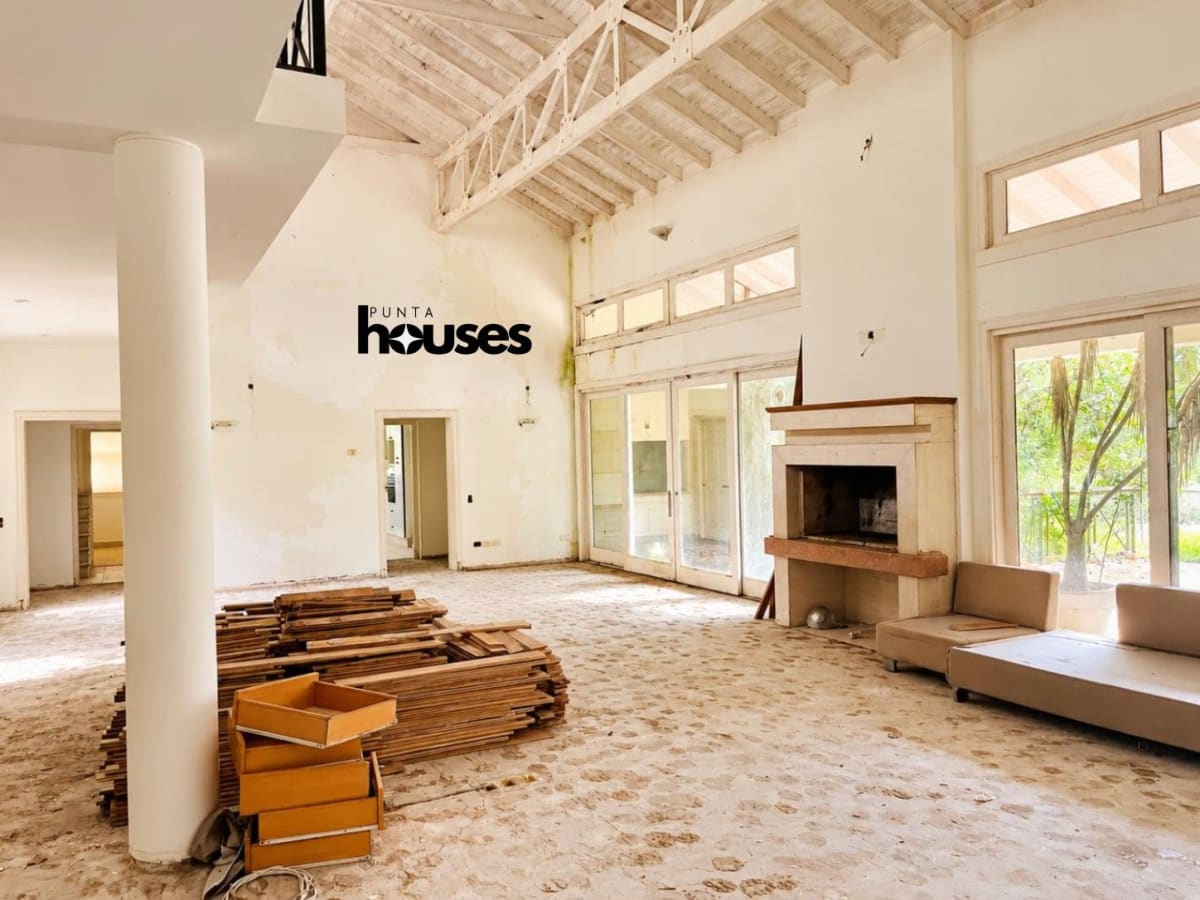
Grand Estate with Pool and Exceptional Renovation Potential

1,000 m² Plot with Development Potential

Three-Bedroom Seafront Apartment with Private Terraces

4-Bedroom House and Guest House for Sale with Pool and Large Garden
Interested in this area?
Our team knows every corner of this neighborhood. Let us help you find the right property.