
Playa Brava
Living on Playa Brava, Punta del Este
Punta del Este has two faces, and they could not be more different. The Mansa is calm, westward-looking, domestic in pace. The Brava faces east, directly into the open Atlantic, and it shows. The waves are real here. The wind is real. The energy is louder, more relentless, and more demanding than anything the sheltered bay side can generate. And for a specific kind of buyer, one who wants the drama, the sunrise, the active beach, and the city's most ambitious residential towers, Playa Brava is the only address that makes sense.
The strip runs for roughly 8 kilometres along the Atlantic-facing shore, starting at Parada 1 just east of the Peninsula tip and extending northeast toward La Barra. It is lined with apartment towers that have become progressively taller, more amenity-laden, and more architecturally ambitious over the past two decades, the physical record of Punta del Este's transformation from a seasonal resort into a year-round international destination. The Brava is where the city's ambition is most legible in concrete and glass.
La Mano: The Accidental Icon
There is no better introduction to Playa Brava than the sculpture that has stood at Parada 1 since February 1982 and has been misunderstood, affectionately, ever since.
La Mano, five enormous concrete fingers pushing up through the sand as though a giant were trying to claw their way out — was created by Chilean sculptor Mario Irarrázabal during the First International Meeting of Modern Open-Air Sculpture in Punta del Este. He was the youngest of nine international artists invited to participate, and when the designated spots on the public square were claimed by other sculptors, he simply moved to the beach and started digging. He had the entire summer to complete his submission. He finished in six days.
The official title is Hombre Emergiendo a la Vida, Man Emerging into Life. Its popular name, Los Dedos (The Fingers), is more accurate to what you actually see. Irarrázabal's intention was practical as much as artistic: a warning to swimmers that the Brava's Atlantic conditions are genuinely dangerous, especially beyond the lifeguarded sections. The sculpture won first prize in the municipal art contest that year, was built in reinforced concrete with marine-grade protective coating, and is the only surviving piece from that 1982 event. Every other artist's work has long since been removed. Irarrázabal's remains, partially because it is technically excellent, and partially because removing it would now be unthinkable.
It is the most photographed landmark in Uruguay, the unofficial symbol of Punta del Este, and, given that most visitors pose cheerfully in front of it for holiday photos, one of the world's more successful public safety warnings.
The Beach: Active, Energetic, Atlantic
The Brava designation is not marketing. It means fierce in Spanish, and the name is an accurate description of what arrives from the open Atlantic on a good swell day. Surf has been part of the Brava's identity since the 1960s, when the first wooden boards arrived on this stretch of coast. The most popular break among locals is La Olla, at Parada 3½, where waves form over rocks and generate lefts that can run up to 200 metres on the right conditions. Playa El Emir, protected by its elevated rambla, is a step up in intensity — powerful, deep water, recommended for experienced surfers. Multiple surf schools operate year-round along the Brava, and the surf community here has the genuinely lived-in character of a place where people actually do this every day rather than rent a board for a holiday afternoon.
Beyond surfing, the Brava is a kitesurfing corridor when the southeast winds pick up, with conditions that attract riders from across the region. Bodyboarding, paddleboarding, and beach volleyball all have their established communities and their established spots along the paradas. The rambla that runs the length of the beach fills each morning with joggers and cyclists, and each morning, unlike the Mansa, it faces the sunrise head-on, which has made east-facing Brava apartments particularly coveted by buyers who have thought carefully about which direction they want their balcony to face.
The paradores — the beach clubs and bars that operate along the Brava from December to March, are a category of their own. Some are simple kiosks serving cold drinks and empanadas. Others are full restaurant operations that transition into nightclubs after 10pm, with sound systems that make the intention clear. During January the Brava strip has a social intensity that the Mansa, by design, never matches. The beach itself becomes a venue: volleyball tournaments, surfing competitions, fashion shows, and the ambient spectacle of a summer crowd that has come here specifically to be part of it.
Racing History on the Sand
A detail that surprises most people: the rambla along Playa Brava is also a racing circuit. The Playa Brava Beach Circuit hosted motorsport as early as 1981, when Argentine Formula 2 races were run on its streets. In December 2014, Punta del Este made global motorsport history when it hosted the first-ever Formula E race to be held in South America — the Brava rambla and surrounding streets configured into a temporary street circuit, with electric cars racing past apartment towers and beach clubs. The city hosted Formula E again in 2015 and 2018. The image of single-seater electric racecars on a beach circuit in front of Atlantic surf is still one of the more striking things Punta del Este has produced, and it says something about the neighbourhood's character: this is not a place that does things quietly.
The Towers: Architecture, Investment, and the New Benchmark
The residential buildings along Playa Brava have set the pace for luxury development in Uruguay across the past decade. The Brava strip is where developers have consistently pushed hardest, tallest, most amenity-rich, most architecturally ambitious, and where buyers from Argentina, Brazil, Europe, and North America have responded with the strongest prices in the market.
Trump Tower, completed on the Brava in the early 2020s, brought a new price-per-square-metre benchmark and an amenity package, indoor ATP tennis court, rooftop helipad, private wine cellar, spa, that pushed the definition of what a residential tower in Punta del Este could be. At the more historically established end of the strip, Hotel L'Auberge, a landmark at Parada 19 built around a 70-year-old stone water tower, represents a different kind of architectural continuity: a building that has endured precisely because it understood from the beginning that the Brava's greatest asset is its relationship to the sea rather than its distance from it.
Property prices on Playa Brava are among the highest in Uruguay, and among the highest appreciating. First-line and ocean-view apartments command $5,500–$10,000 per square metre, sitting alongside the Peninsula and Manantiales at the top of the Punta del Este market. The broader Brava strip has seen appreciation of approximately 40–60% over five years — driven by new luxury development raising price floors, sustained international demand, and the Brava's unassailable position as the city's showcase address for buyers who want to be seen to have chosen well. Rental yields during peak season are among the strongest in Uruguay, with well-positioned Brava apartments achieving 90–95% occupancy from December to March.
The key investment consideration is differentiation: buildings with panoramic ocean views, modern amenity packages, parking, and heating for year-round use consistently outperform those without. The Brava is a high-competition rental market during peak season — exactly the conditions where quality of product determines whether a property earns or simply sits.
Who Lives Here
The Brava attracts a buyer who is making an active choice rather than a comfortable one. It is louder in summer, more exposed to wind year-round, and more demanding on its residents than the Mansa or the Peninsula. In exchange it offers the most dramatic views, the best surf, the strongest sunrise light, and a social energy during the season that is simply unavailable anywhere else in Punta del Este.
The residential profile reflects this: younger international buyers and investors seeking yield and prestige; Argentine and Brazilian families with multigenerational ties to specific towers; active buyers who surf or kitesurf and want to step onto the beach without driving; and a growing cohort of year-round residents who have discovered that the Brava's off-season — when the towers empty and the beach returns to its elemental self — is one of the more underrated environments in Uruguay for actually getting work done.
Explore current listings on Playa Brava at Punta del Este Houses, or use our Neighborhood Matcher to compare the Brava with other areas across the Punta del Este corridor.
Frequently Asked Questions
Playa Brava faces the open Atlantic Ocean, with real surf, strong winds, and powerful waves — conditions that make it ideal for surfing, kitesurfing, and bodyboarding, but that require caution for casual swimmers. Playa Mansa faces the Río de la Plata estuary on the western side of the Peninsula, with calm, flat water safe for swimming year-round. The Brava has the city's most ambitious residential towers, dramatic sunrises, and intense summer social energy. The Mansa is more residential, quieter, and known for its spectacular sunsets.
La Mano (also known as Los Dedos — The Fingers) is a monumental concrete sculpture of five fingers emerging from the sand at Parada 1 on Playa Brava. It was created in just six days by Chilean sculptor Mario Irarrázabal in February 1982, during the First International Meeting of Modern Open-Air Sculpture. Originally conceived as a warning about the Brava's dangerous currents, it won first prize in the local municipal art contest and is now the most photographed landmark in Uruguay and the unofficial symbol of Punta del Este. It is the only surviving piece from the 1982 event.
It requires more caution than Playa Mansa. The Brava faces the open Atlantic, and its currents and waves can be significantly stronger than the sheltered Mansa side. Lifeguards operate along the beach from mid-December to mid-March, and swimming within the flagged areas is generally safe during those months. Outside peak season, swimming is not recommended without experience and local knowledge. The Brava is excellent for surfing, bodyboarding, and kitesurfing — activities designed for its conditions.
Playa Brava sits at the very top of the Punta del Este market. First-line and ocean-view apartments command between $5,500 and $10,000 per square metre, placing it alongside the Peninsula and Manantiales as the most expensive residential addresses in Uruguay. The broader strip has appreciated approximately 40–60% over the past five years, driven by new luxury development and sustained international demand. Budget around $500,000 for a mid-range apartment in a quality Brava building, and $1 million+ for 150–220 sqm in a premium tower with full amenities and sea views.
Yes — it is one of the strongest short-term rental markets in Uruguay during peak season. Well-positioned Brava apartments consistently achieve 90–95% occupancy from December to March, with daily rates that reflect the extreme demand for ocean-view accommodation during summer. The key differentiators for rental performance are sea views, parking, and a modern amenity package — properties with all three significantly outperform those without, particularly outside peak season when competition increases.
Yes. The Playa Brava Beach Circuit hosted the first Formula E race ever held in South America on December 13, 2014 — the third round of Formula E's inaugural season. Electric single-seaters raced on a temporary street circuit using the Brava rambla and surrounding roads, with sand blowing across the track from the beach. Punta del Este hosted Formula E again in 2015 and 2018. The circuit had actually been used for motorsport as far back as 1981, when Argentine Formula 2 races were run on these streets.
The most popular local break is La Olla at Parada 3½, where waves form over rocks and generate lefts that can run up to 200 metres on good conditions. Playa El Emir, protected by an elevated rambla, offers deeper water and more powerful conditions suited to experienced surfers. Multiple surf schools operate year-round along the Brava for beginners and intermediates. Kitesurfing is strong when southeast winds pick up, and bodyboarding conditions are consistent throughout the year.
Hotel L'Auberge is one of the most historically distinctive properties on the Brava strip, built around a 70-year-old stone water tower at Parada 19. It represents a different architectural philosophy from the new luxury towers that dominate the Brava — intimate, historically grounded, and known for retaining the atmosphere of classic Punta del Este. It remains a reference point on the Brava strip for guests and residents who value character alongside location.
Open Atlantic Surf
Playa Brava faces the open Atlantic with 8 kilometres of beach, consistent surf breaks, kitesurfing conditions, and bodyboarding year-round — the active, energetic counterpart to the calm Mansa.
La Mano — Uruguay's Most Iconic Sculpture
Five concrete fingers rising from the sand at Parada 1. Created in just six days by Chilean sculptor Mario Irarrázabal in 1982, La Mano is the most photographed landmark in Uruguay and the unofficial symbol of Punta del Este.
Highest Prices Per m² in Punta del Este
Playa Brava commands $5,500–$10,000 per sqm for premium apartments, among the highest in Uruguay. Modern towers with ocean views and full amenities have appreciated 40–60% over the past five years.
The City's Showcase Strip
The Brava rambla runs from Parada 1 at the Peninsula all the way east toward La Barra — lined with luxury towers, beach clubs, surf schools, paradores, and some of the best sunrise views in Punta del Este.
Surf, Kitesurf & Water Sports
Home to multiple surf schools operating year-round, consistent breaks at La Olla and Playa El Emir, and strong kitesurfing conditions — Playa Brava is the water sports hub of the city.
Paradores, Restaurants & Nightlife
From laid-back beach paradores to high-end restaurants and the nightlife that spills from the hotels in summer — the Brava strip has the most concentrated seasonal social life in Punta del Este.
Luxury Towers & Sunrise Apartments
The Brava is the address of choice for buyers who want east-facing apartments — dramatic Atlantic sunrise views, ocean-facing terraces, and the newest, most amenity-rich residential developments in the city.

Designer 4 BDR Residence at Fendi Château
Inquire for Price

Exclusive Residence Laguna Poseidon (312)
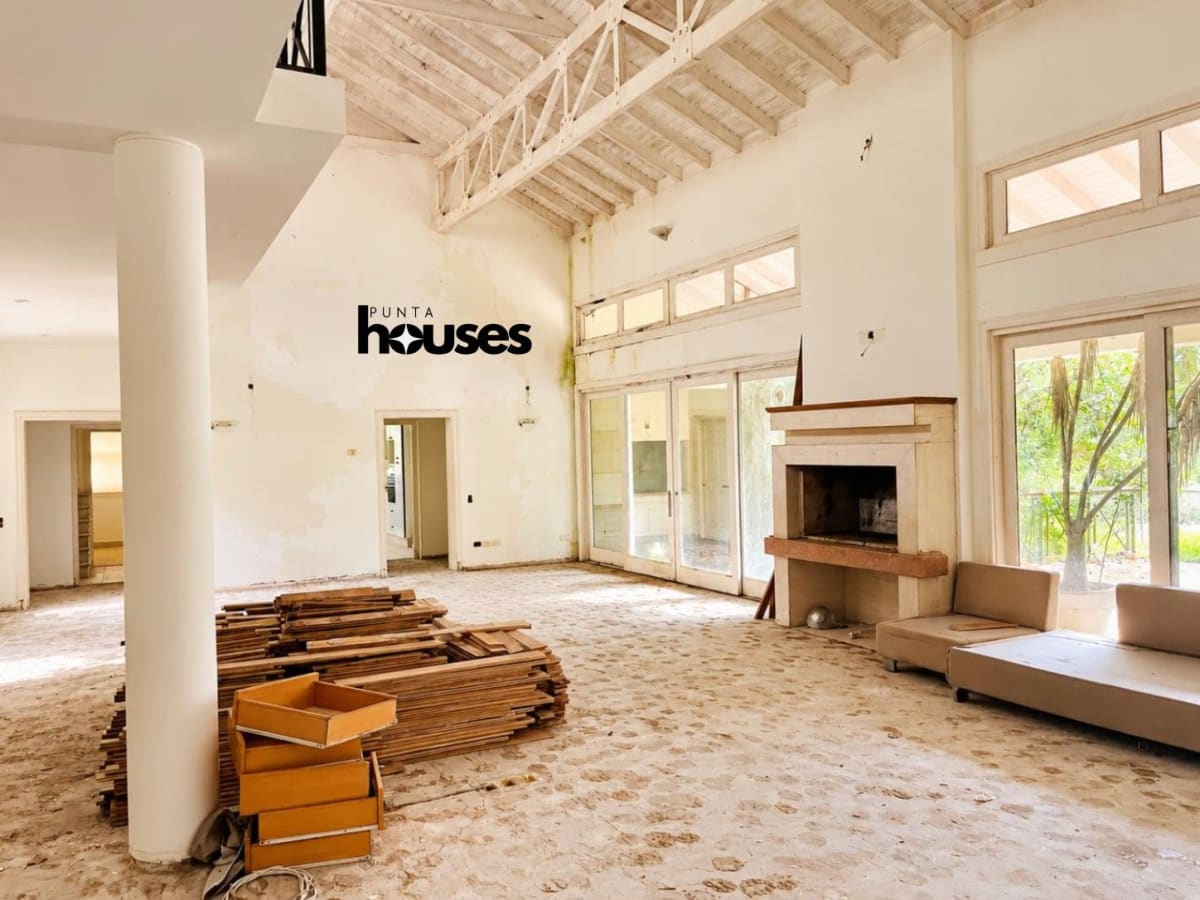
Grand Estate with Pool and Exceptional Renovation Potential

1,000 m² Plot with Development Potential

Three-Bedroom Seafront Apartment with Private Terraces

4-Bedroom House and Guest House for Sale with Pool and Large Garden
Interested in this area?
Our team knows every corner of this neighborhood. Let us help you find the right property.