El Golf
Living in El Golf, Punta del Este
There is a particular kind of silence in El Golf that is different from the silence of other quiet parts of Punta del Este. It is the silence of old pine trees, of long gravel driveways, of houses set so far back from the street that you might not see them at all if you did not know to look. It is the silence of a neighbourhood that was built to last — in 1948, by an architect who understood that the best residential work is the kind that still looks considered seven decades later.
El Golf is the most architecturally distinguished neighbourhood in Punta del Este, and arguably the most prestigious single-family residential address in Uruguay. It takes its name from the Cantegril Country Club's 18-hole golf course, which does not merely border the neighbourhood but physically defines it — the fairways winding through the same pine and eucalyptus forest that the residential streets thread between, so that the line between club grounds and neighbourhood gardens is often more conceptual than visible. It is a place of large houses, exceptional gardens, and a quality of construction that the subsequent building booms of the 1970s and 1980s never quite replicated and that no new development in Punta del Este has yet surpassed.
The Origin: Dubourg's Vision in the Forest
El Golf was born in 1948, when Uruguayan businessman Pascual Gattás and his Argentine partner Óscar Cadermatori identified a stretch of land adjacent to the newly developed San Rafael neighbourhood — at the time little more than sand, a few nascent streets, and very few trees — and commissioned Argentine architect Arturo Dubourg to design a residential precinct around the embryonic golf course.
Dubourg was already one of the most respected architects in the Río de la Plata region, and his approach to El Golf was both ambitious and specific. He designed in a Normandy-influenced vernacular: steeply pitched roofs, generous timber detailing, cedar-panelled interiors, stone and brick façades that recalled the French countryside rather than anything that existed in coastal South America. The first homes were completed shortly after the neighbourhood's formal inauguration in 1948, when the water tower at Carnoustie and Avenida del Agua — still standing today as the structural heart of Hotel L'Auberge — was completed as the neighbourhood's original infrastructure landmark.
Over the following three decades, Dubourg would build more than a hundred chalets in the neighbourhood and surrounding areas. He designed Grey Rock, the house he originally built for himself before selling it when demand proved irresistible. He designed Daffodils. He designed Aldebarán, the landmark property that became associated with the Fortabat family. After both his own houses sold almost immediately, Dubourg reportedly abandoned the idea of building himself a home in El Golf entirely, choosing instead to spend his summers at Hotel L'Auberge — which says something both about his attachment to the neighbourhood and the impossibility of keeping a desirable property there once the market knew it existed.
The neighbourhood today retains a significant number of original Dubourg chalets, though not all have survived. A 2022 article in Revista Verdad noted with some alarm that two original chalets — Malú and Loma Verde — had been demolished in 2019, replaced by more generic construction. The loss of these buildings is a genuine one, and it has sharpened local awareness of El Golf's architectural heritage. What remains is still extraordinary: more than a hundred large residences, many of them fully intact examples of Dubourg's Normandy-influenced work, set in gardens that have had 70-plus years to establish themselves as genuine private parks.
The Golf Course: Not Just the Name
The relationship between El Golf and the Cantegril Country Club golf campus is not merely nominal. The course is physically present in the neighbourhood — its fairways visible between the pines from residential streets, the club's own buildings and facilities integrated into the landscape rather than separated from it by fences and car parks. As one golf guide observes, after a round, the serpentine residential streets through the forest conceal the most beautiful houses in Punta del Este — a description that captures something true about the relationship between the course and the neighbourhood it gave its name to.
The 18-hole course, designed in 1947 by American architect Luther Koontz and subsequently refined, is the Golf Campus of the broader Cantegril Country Club — a club whose Central Campus, history, and full facilities are covered in our Cantegril neighbourhood guide. The Golf Campus is five minutes from the Peninsula and two blocks from the Brava beach, positioned at the exact intersection of resort convenience and residential seclusion that El Golf achieves better than any other part of the city. Membership provides access to all three Cantegril campuses — golf, tennis, pools, equestrian, and the full sporting and social programme — making the club an extension of the neighbourhood rather than a separate destination.
Hotel L'Auberge: The Neighbourhood's Soul
The most beloved institution in El Golf is not a house — it is a hotel. Hotel L'Auberge, built around the neighbourhood's original 1947 water tower at Carnoustie and Avenida del Agua on Parada 19 of the Brava rambla, is one of the most characterful small hotels in South America. Its 36 rooms are individually decorated with antiques, four-poster beds, and country house objects that feel entirely appropriate to their pine-forest setting. The original structure — brick and timber, Tudor in style — remains intact; rooms were added within the tower in 1981 without altering its exterior or scale.
The tea room is the neighbourhood's most consistent social meeting point, operating through summer with the Belgian waffles that have become a genuine local institution — the kind of detail that gets passed between visitors for decades before it becomes a cliché, and that still justifies the short drive or walk from most houses in the neighbourhood. The gardens, the open fireplaces in winter, the outdoor pool under the pines: L'Auberge is what happens when a building is loved rather than merely maintained. Architects and architecture enthusiasts from across the region visit the neighbourhood specifically to see the hotel and the surviving Dubourg chalets, making El Golf one of the few residential areas in Uruguay with a genuine claim to being an architectural destination.
The Property Market
El Golf is the closest thing Punta del Este has to a trophy property market. The plots are large — typically 1,000 m² to 3,500 m² for standard houses, rising to 6,000–9,000 m² or more for the estate-scale properties — and the houses built on them reflect decades of careful ownership and, in many cases, significant ongoing investment. The Dubourg originals that have been properly maintained and sensitively updated command premiums that reflect both their architectural rarity and the impossibility of replicating them.
Entry-level properties in El Golf — a well-maintained three-bedroom house on a generous plot, without the Dubourg pedigree or exceptional gardens — begin around $800,000 to $1,000,000. The mid-market sits firmly in the $1,200,000 to $2,500,000 range: renovated or original Dubourg chalets with four to six bedrooms, significant gardens, private pools, and the architectural character that defines the neighbourhood. The upper end is open-ended: properties on plots above 5,000 m², with substantial construction, exceptional gardens, and the rare combination of Brava proximity and forest privacy that El Golf uniquely provides, transact at $3,000,000 and above, with the most significant estates having no real ceiling in a market where comparable properties simply do not exist elsewhere in Uruguay.
The price per square metre for construction is not the right framework for El Golf — in a neighbourhood where a 500 m² house on a 6,000 m² plot sells for $2.5 million, the land and the setting are doing most of the work. What matters instead is understanding that El Golf is a market of absolute supply scarcity: there is a fixed and small number of properties, the best of them change hands rarely, and the combination of architectural heritage, golf course adjacency, Brava beach proximity, and forest privacy cannot be assembled elsewhere in Punta del Este at any price.
Who Lives in El Golf
The profile of El Golf residents reflects what the neighbourhood demands: serious commitment, significant resources, and an appreciation for quality that goes beyond square metres and amenity lists. Argentine and Uruguayan families with generational ties to specific houses predominate — families for whom El Golf is not a lifestyle choice so much as the only acceptable address. Brazilian buyers, particularly from São Paulo, have grown as a presence in recent years, drawn by the neighbourhood's combination of exclusivity and nature. International buyers — European and North American — typically discover El Golf while researching the broader Punta del Este market and conclude, after seeing what exists here, that the comparison is straightforward.
What all of them share is an understanding that El Golf offers something genuinely irreplaceable: the most architecturally significant residential stock in Uruguay, set in a mature forest alongside a historic golf course, five minutes from the city's commercial heart and two blocks from the Atlantic. That combination was assembled over seven decades and cannot be recreated. For buyers who understand what they are looking at, El Golf is not expensive — it is simply rare.
Explore current listings in El Golf at Punta del Este Houses, or use our Neighborhood Matcher to compare El Golf with other areas across the Punta del Este corridor.
Frequently Asked Questions
El Golf takes its name from the Golf Campus of the Cantegril Country Club, whose 18-hole course physically defines the neighbourhood's layout and landscape. The course was originally inaugurated in 1947, with the neighbourhood formally developed from 1948 onward by businessman Pascual Gattás and his partners, who commissioned architect Arturo Dubourg to design residences around the golf course's fairways and forest setting.
Arturo Dubourg was an Argentine architect who became the defining designer of El Golf from 1948 onward. He worked in a Normandy-influenced vernacular — steeply pitched roofs, cedar timber detailing, stone and brick façades — that gave the neighbourhood its distinctive architectural character. Over three decades he designed more than a hundred houses in the area, including Grey Rock (originally his own house), Daffodils, and Aldebarán. His buildings remain the most valuable and sought-after properties in El Golf; the loss of two original chalets to demolition in 2019 prompted local calls for formal heritage protection of the surviving stock.
Hotel L'Auberge is a 36-room boutique hotel built around the neighbourhood's original 1947 water tower at Carnoustie and Avenida del Agua on Parada 19 of the Brava rambla. It is the most celebrated institution in El Golf — a Tudor-style building with individually decorated rooms, antiques, a renowned tea room serving Belgian waffles, and gardens under the pines that have become a local institution. Dubourg himself reportedly spent his summers at L'Auberge after selling the two houses he built for himself in the neighbourhood. It is a MICHELIN Guide listed hotel.
Closer than most people expect for a neighbourhood of this scale and residential character. The Brava rambla at Parada 19 is just two blocks from the neighbourhood's southern boundary — Hotel L'Auberge sits directly on the rambla. Most houses in El Golf are within a 5–10 minute walk of the Brava beach. The combination of Brava proximity and forest privacy, in a neighbourhood where neither typically coexists with the other at this price point, is one of El Golf's defining qualities.
El Golf is the most expensive single-family house market in Punta del Este. Entry-level properties — well-maintained houses on generous plots — begin around $800,000 to $1,000,000. The core market for renovated or original Dubourg chalets with four to six bedrooms and significant gardens sits between $1,200,000 and $2,500,000. Estate-scale properties on plots above 5,000 m² with exceptional gardens and construction transact at $3,000,000 and above, with no real ceiling for the most significant properties. Price per square metre of construction is not the most useful framework here — the value is in the land, the setting, and the architectural heritage.
Yes — and it is one of the better-positioned luxury neighbourhoods for it. The Brava beach, Hotel L'Auberge, the Cantegril Country Club's Golf Campus, and the Peninsula's full service infrastructure are all within five to ten minutes. The forest character of the neighbourhood provides a genuinely different quality of daily life in winter — calm, private, naturally beautiful — without the isolation that affects more remote luxury zones. Families who have spent decades in El Golf consistently describe it as more pleasant in winter than in the summer peak, which is a meaningful endorsement of its year-round livability.
The two neighbourhoods share the Cantegril Country Club as their central institution — Cantegril hosts the Central Campus (tennis, pools, social club, cultural events), while El Golf wraps around the Golf Campus. They are adjacent and complementary rather than interchangeable: Cantegril is broader and more mixed, with beachfront apartments, private schools, Woodside and St. JosephMary, and a wider range of property types. El Golf is exclusively a house neighbourhood of exceptional scale and architectural pedigree, with the golf course as its defining spatial feature. Our full Cantegril guide covers the shared club history and the broader neighbourhood in detail.
Grand Houses & Mansion-Scale Estates
El Golf is defined by large single-family residences — many of them Arturo Dubourg's original Norman-style chalets from the late 1940s onward, set on plots ranging from 1,000 to over 9,000 m², with private parks, pools, and a scale of construction rarely seen elsewhere in Uruguay.
Golf Course & Forest Setting
The neighbourhood is built around and between the fairways of the Cantegril Country Club's 18-hole golf course — winding forest streets, mature pine canopy, and a green density that gives El Golf a quality closer to a private park than a city neighbourhood.
Between the Peninsula & La Barra
El Golf sits equidistant between Punta del Este's Peninsula and La Barra — five minutes from one, six from the other — with direct Brava beach access two blocks from the neighbourhood's southern edge.
Two Blocks from Playa Brava
The Brava beach is remarkably close for a neighbourhood of this residential character — Hotel L'Auberge sits at Parada 19 on the Brava rambla, just steps from the neighbourhood's southern boundary.
Cantegril Country Club Golf Campus
The Golf Campus of the Cantegril Country Club — 18 holes, par 71, named the best course in Punta del Este by the Ministry of Tourism — is not just nearby; it physically defines El Golf's layout and green character.
Hotel L'Auberge
The neighbourhood's most celebrated institution — a Tudor-style boutique hotel built around a 1947 brick water tower — operates a restaurant and the legendary tea room serving Belgian waffles, and anchors El Golf's social life for residents and visitors alike.
Punta del Este's Most Prestigious House Market
Properties in El Golf are among the most sought-after in Uruguay — large plots, architectural pedigree, and an address that carries weight in the regional luxury market. Entry starts around $800,000 and reaches well into the millions for estate-scale properties.

Modern 5BR Home with Pool & Garden Parade

Beautiful Plot, One Block from the Golf Course
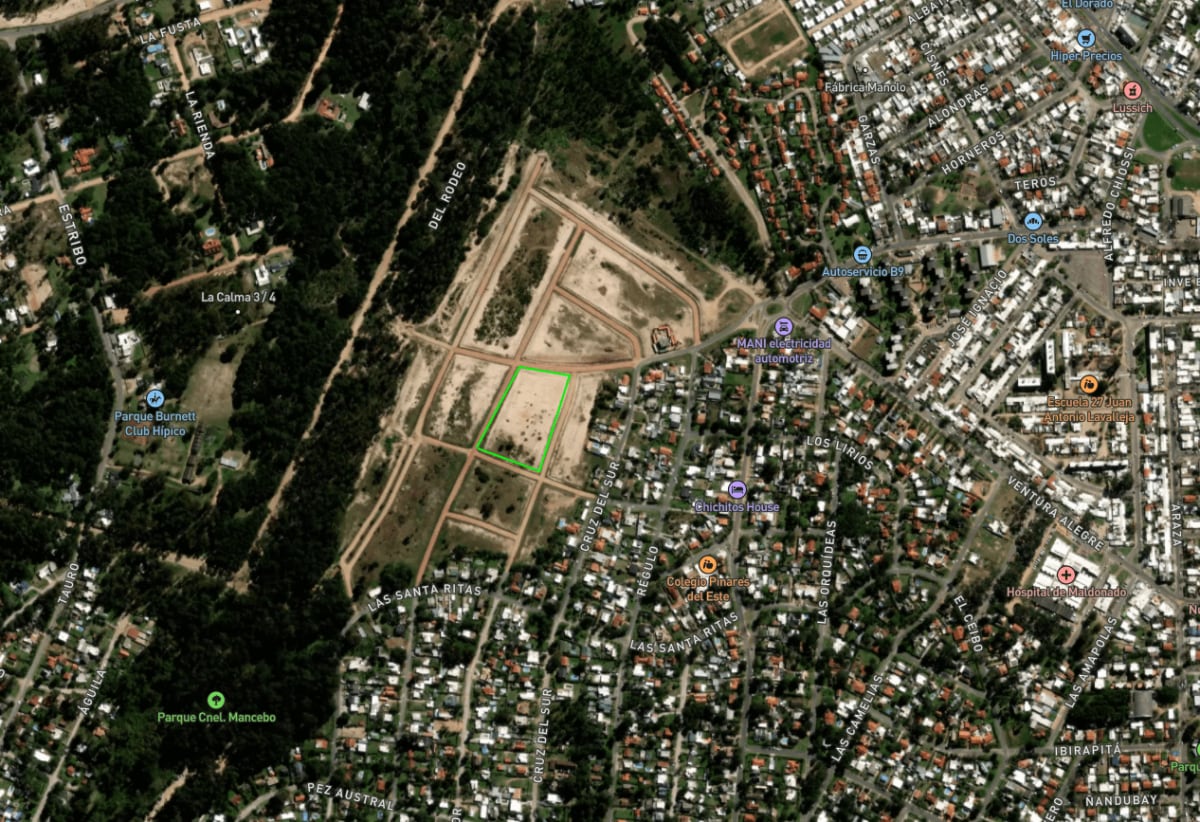
Perfect Plot for Investment

Modern 3BR House with Heated Pool Lugano
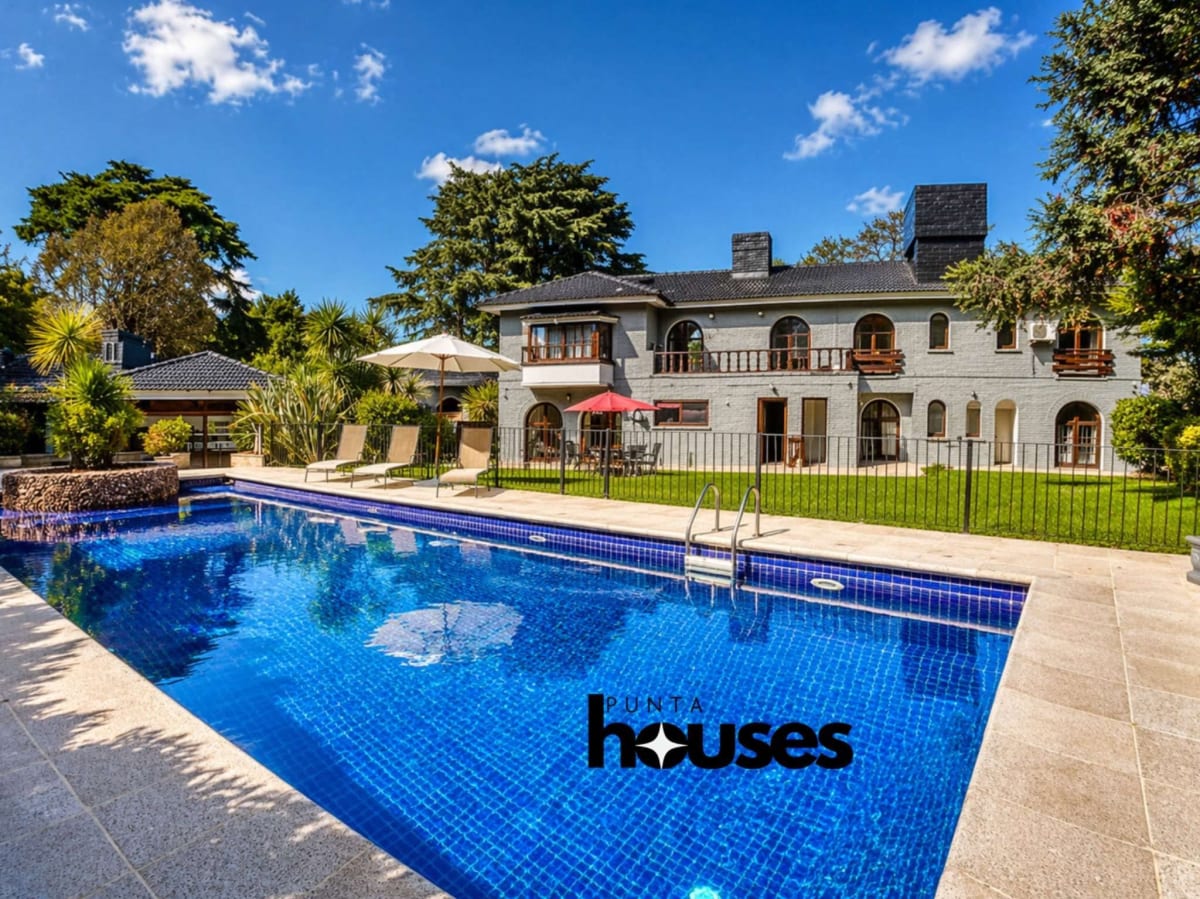
Lugano Luxury Home with 5 Suites & Pool
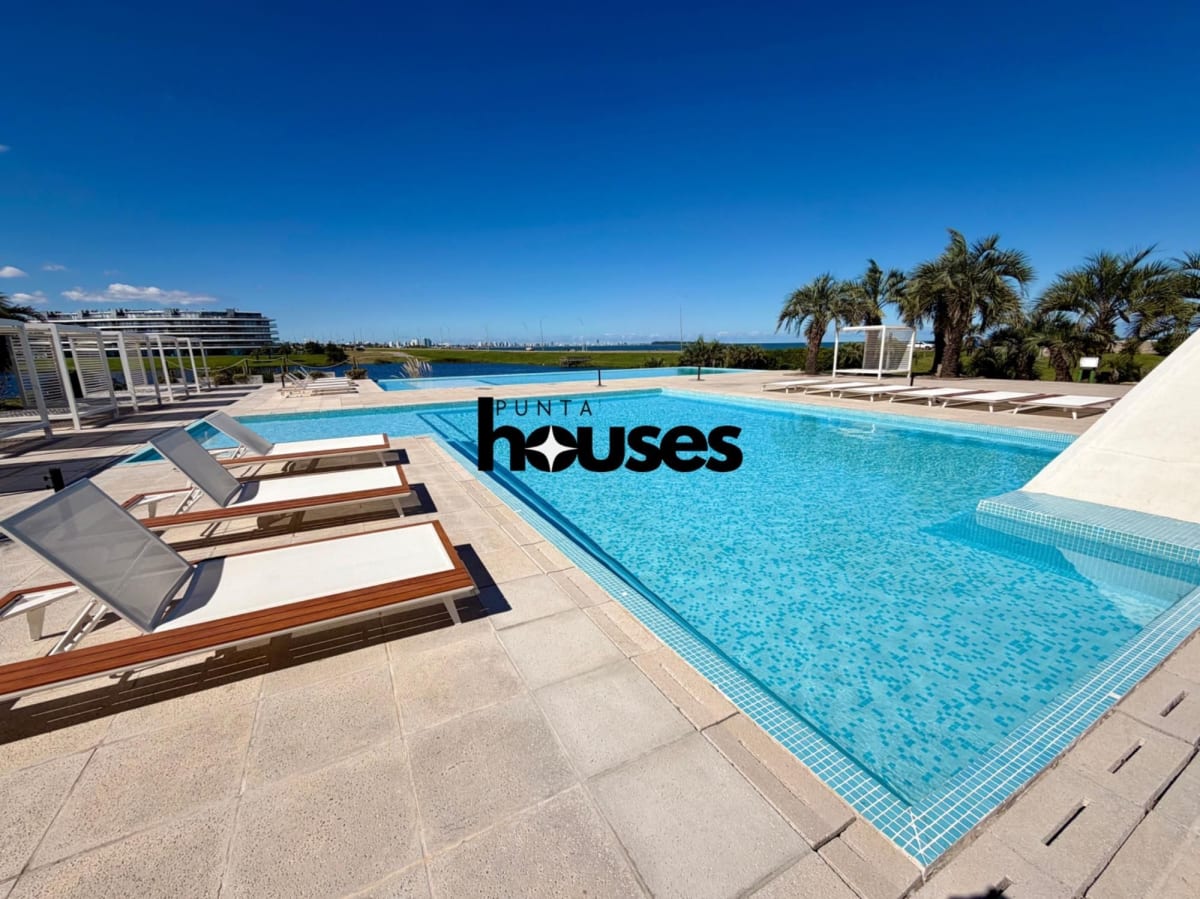
2BR Apartment Laguna and Ocean Views (310)
Interested in this area?
Our team knows every corner of this neighborhood. Let us help you find the right property.