Pinares
Living in Pinares, Punta del Este
The name tells you something important: Pinares means pine groves. The neighbourhood earned that name from the pine and eucalyptus forests planted across this stretch of Punta del Este in the late nineteenth and early twentieth centuries by the same visionary foresters — including the Burnett family and later Antonio Lussich — who transformed kilometres of bare coastal dunes into the shaded, liveable city that Punta del Este became. Those trees are still here, now fully grown, lining the residential streets with a canopy that gives Pinares a green density and a quiet atmosphere that contrasts notably with the more built-up, touristic areas of the city further east.
Pinares occupies a central-western position within Greater Punta del Este — between the city centre and Maldonado, bordered by Avenida Roosevelt to the north and extending south toward Playa Mansa. It is neither the most glamorous address in the city nor the most obscure. What it is, consistently, is practical: close to everything, priced accessibly, inhabited predominantly by permanent residents, and — in recent years — in the early stages of a development cycle that is bringing new construction, improved infrastructure, and growing investment interest to an area that has always been solid and is now becoming significantly more visible.
The Beach: Playa Pinares
The Mansa coast continues west of the main tourist paradas into a stretch that locals call Playa Pinares — a quieter, slightly coarser extension of the Mansa proper. The sand here is a little heavier than the fine beaches closer to the Peninsula, the water is slightly deeper, and the crowd is significantly thinner. This is not a parador beach lined with branded beach clubs and DJ sets; it is a beach that local families walk to on summer mornings and come back from in the afternoon, with few tourists and none of the commercial density of the Parada 1–10 stretch. For residents who want beach access without the summer performance that accompanies it, Playa Pinares delivers exactly that.
The Queen Anne parador at Parada 31 is the central gathering point — a beach bar and restaurant with its own parking that concentrates activity without overwhelming the rest of the beach. Beyond it in both directions, the sand opens up to a quieter experience that is genuinely appreciated by the permanent residents who make up the majority of Pinares' year-round population.
The Neighbourhood Character
Pinares is one of the few parts of Punta del Este that can accurately be described as a genuine residential neighbourhood rather than a resort zone with permanent residents attached. The streets have a local tempo: people walking dogs, children cycling on footpaths, parilleros going on Sunday afternoons, the kind of social fabric that builds when a community actually lives somewhere rather than visits it.
The housing stock is predominantly single-family homes — many built in the 1970s through 1990s, solid construction on generous plots, with gardens and pools that reflect the priorities of families who wanted space rather than sea views. The architecture is unpretentious but comfortable: tiled roofs, mature gardens, the occasional new build sitting alongside an older house that has been in the same family for decades. There are also apartment buildings, particularly toward the Roosevelt and Mansa edges of the neighbourhood, that provide a more urban typology for buyers who want proximity to services without committing to a house and garden.
What Pinares lacks in glamour it compensates for in livability. The parks are quiet. The streets are safe. The trees are old enough to provide genuine shade. The beach is a walk away. The hospitals, supermarkets, banks, and schools of the Roosevelt corridor are minutes in the other direction. It is the kind of neighbourhood that attracts people who have thought carefully about what they actually need from a place to live, rather than what sounds impressive.
The Investment Story: New Development Near Lussich
The most significant change in Pinares in recent years is happening toward its western and northern edges — in the area approaching Avenida Lussich (the perimetral road also known as Route 38) and along the Aparicio Sarabia axis. A 2022 planning code change that raised the permitted building height on the Aparicio Sarabia corridor from four to 25 storeys — intended to decentralise development pressure away from the beachfront and toward new residential corridors — has triggered a wave of new construction in this part of the city, much of it in and around Pinares.
The vehicle for much of this development is Uruguay's Ley de Vivienda Promovida — a tax-incentivised affordable housing programme that has generated 2,830 units in the Punta del Este market as of end-2024, representing $265 million in total investment. Pinares is one of the primary beneficiaries. According to analysis by Moebius Consultora Inmobiliaria, the average price per square metre for Vivienda Promovida projects in Pinares is approximately $2,400 — a figure that is, notably, lower than equivalent promoted housing in premium Montevideo neighbourhoods like Punta Carretas ($3,400/sqm), and dramatically below Punta del Este's beachfront prices. Four-bedroom units of 105 m² have been available in Pinares from around $254,000 — a price point essentially unavailable elsewhere in the city for that floor area.
The return profile is also compelling. The same Moebius analysis found that Vivienda Promovida projects in the Punta del Este market — concentrated in Pinares, Roosevelt, and Maldonado Centro — deliver an average annual yield of 7.7% in USD, driven by year-round rental demand from permanent residents who need properly sized, well-located housing and are not well-served by the city's existing stock of small tourist apartments. For investors who have looked at the beachfront markets and found the yields insufficient relative to the capital required, Pinares offers a genuinely different equation: lower entry price, larger units, higher yields, and a tenant profile of long-term residents rather than seasonal visitors.
The new developments near Lussich are also adding local commercial infrastructure — supermarkets, services, and retail — that is making this western edge of Pinares increasingly self-sufficient. The area between Pinares proper and the perimetral is evolving from a quiet residential extension into a viable mixed-use zone that is creating its own gravity. Buyers who identify this trajectory early — as they did in analogous corridors in Montevideo's Cordón and Tres Cruces neighbourhoods before they appreciated significantly — are positioning ahead of a price curve that the data suggests is still in its early stages.
The Real Estate Market
Pinares offers the widest price range of any neighbourhood in Punta del Este. At the lower end — older houses on the western fringe, or smaller apartments without beach proximity — entry points begin at $2,200/sqm, the lowest in the city. Well-maintained houses on generous plots within the established pine-shaded core of the neighbourhood trade in the $2,500–$3,200/sqm range. New construction and Vivienda Promovida projects cluster around the $2,400–$2,800/sqm mark, offering modern finishes, energy efficiency, and fiscal incentives that older stock cannot match. At the upper end, larger renovated houses closer to the Mansa or with particularly strong plot and garden positions can approach $3,500/sqm — the threshold at which Pinares begins to converge with the Cantegril and Marly markets one zone to the east.
The key price anchor is the comparison with equivalent stock in Montevideo's premium neighbourhoods, which now trade above Pinares despite offering no beach access, no pine forests, and significantly more urban density. This inversion — noted explicitly by market analysts at Moebius — is a structural opportunity for buyers who understand both markets.
For families, the most compelling option is the established house market in the neighbourhood's interior: 3–4 bedroom properties on plots of 500–1,000 m² with gardens and pools, typically ranging from $250,000 to $450,000, that offer a quality of year-round family living unavailable in the beachfront tower market at any equivalent price.
Who Lives in Pinares
Pinares draws a buyer who is prioritising livability over prestige and value over views — and who has usually done enough research to know that those are not compromises so much as a different set of priorities. The neighbourhood's permanent residents are predominantly Uruguayan families who have been here for a generation, Argentine families who relocated permanently and needed space that the Mansa apartments could not provide, and a growing number of expats — particularly those with children — who identified Pinares as the neighbourhood where budget, school access, beach proximity, and residential calm converge most effectively.
The newer investor profile, drawn by the Vivienda Promovida yields and the development story near Lussich, is adding a different layer: buyers from Argentina, Brazil, and increasingly Europe who are making their first Punta del Este purchase and want a well-located, yield-generating asset at a price that allows them to participate in the market without the $500,000+ commitment that the Mansa and Brava require.
What both groups share is an understanding that Punta del Este is a larger, more varied market than its beachfront reputation suggests — and that the most interesting opportunities are often in the neighbourhoods that the holiday brochures skip over.
Explore current listings in Pinares at Punta del Este Houses, or use our Neighborhood Matcher to compare Pinares with other areas across the corridor.
Frequently Asked Questions
Pinares sits at the western entry point of Punta del Este, between the city proper and Maldonado. It is bounded roughly by Avenida Roosevelt to the north and extends south toward Playa Mansa from around Parada 20 westward. It borders Cantegril and Aidy Grill to the east and the newer development areas around Avenida Lussich and Aparicio Sarabia to the west and north. Its central position gives it easy access to both Roosevelt's services and the Mansa beach, while its interior streets remain quiet and residential.
Playa Pinares is a quiet continuation of Playa Mansa beyond the main tourist paradas — slightly coarser sand, slightly deeper water, and significantly fewer people than the sections closer to the Peninsula. It has a genuinely local character, frequented primarily by permanent residents and Uruguayan families rather than international tourists. The Queen Anne parador at Parada 31 provides food and drinks without overwhelming the beach's natural character. For buyers who want beach access without the summer crowd, Playa Pinares is one of the better options in the city.
Several factors converge. First, Pinares has the lowest price per square metre in Punta del Este — $2,200 to $3,000/sqm — making it the most accessible entry point in the city. Second, Vivienda Promovida projects in Pinares deliver average annual yields of 7.7% in USD, according to Moebius Consultora Inmobiliaria — the strongest yield profile in the Punta del Este market. Third, the planning code change on Aparicio Sarabia raised permitted building heights and is triggering new development near Lussich, creating an appreciation trajectory that buyers can still get ahead of. Fourth, Pinares prices are now below equivalent promoted housing in premium Montevideo neighbourhoods, a structural anomaly that analysts consider unsustainable long-term.
Uruguay's Vivienda Promovida law provides tax incentives for developers who build housing designated for rental or sale at regulated prices, targeting residential demand beyond the luxury segment. Pinares is one of the primary zones in the Punta del Este market where these projects have been developed — 98 projects totalling 2,830 units have been built across the broader Punta del Este area under this framework as of end-2024. In Pinares specifically, promoted housing projects offer four-bedroom units of around 105 m² from approximately $254,000, with price per square metre around $2,400 — below comparable promoted housing in premium Montevideo neighbourhoods.
The market offers three main categories. First, established single-family houses on generous plots — typically 3–4 bedrooms with gardens and pools, ranging from $250,000 to $450,000 — representing the backbone of the neighbourhood's residential stock. Second, Vivienda Promovida apartment buildings with modern finishes and fiscal incentives, clustered around $2,400–$2,800/sqm. Third, older apartment buildings toward the Roosevelt and Mansa edges of the neighbourhood, offering more affordable entry points for buyers prioritising proximity to services. New townhouse developments and gated communities are also appearing, particularly toward the Lussich corridor.
Yes — it is one of the most naturally suited parts of Punta del Este for year-round life. The neighbourhood has a genuine permanent population and a daily rhythm that does not depend on the summer season. Roosevelt's full commercial infrastructure — Sanatorio Cantegril, Devoto and supermarkets, banks, pharmacies, bus connections — is minutes away. The beach is walkable. Schools including Woodside and St. JosephMary in neighbouring Cantegril are accessible. Unlike the more purely seasonal parts of the city, Pinares does not empty out after February — which is precisely why the rental yield profile for long-term leases here is among the strongest in the market.
The two neighbourhoods are adjacent and share a similar residential character — tree-lined streets, family orientation, year-round livability — but Pinares is noticeably more affordable. Cantegril's beachfront apartments trade at $3,500–$7,000/sqm, while Pinares' established houses and new apartments range from $2,200 to $3,200/sqm. Cantegril has the Country Club, Woodside School within its boundaries, and La Azotea de Haedo as cultural anchors; Pinares has stronger investment yield dynamics and a more accessible entry price. Many buyers consider both before choosing based on whether prestige institutions or investment return takes priority.
The area near Avenida Lussich (the perimetral road that links Punta del Este with the airport and Punta Ballena) is undergoing accelerated development following the 2022 planning code change that raised permitted building heights on the Aparicio Sarabia axis from four to 25 storeys. New residential towers, mixed-use complexes, and gated communities are being built in this zone, adding commercial infrastructure including supermarkets and services that are making it increasingly self-sufficient. This is the part of Pinares with the most active development pipeline and the strongest near-term appreciation potential.
Pine Forests & Green Streets
True to its name, Pinares is defined by mature pine and eucalyptus trees that line its residential streets — a legacy of the early forestation of Punta del Este that gives the neighbourhood a density of green found in few other parts of the city.
Playa Mansa & Playa Pinares
The neighbourhood borders the Mansa coast from around Parada 20 onward. Playa Pinares — a quieter, slightly coarser continuation of the Mansa — is the local beach: uncrowded, natural, and a short walk from most residential streets.
Best Value Per m² in Punta del Este
Pinares has the lowest price per square metre in the city — $2,200 to $3,000/sqm — yet sits within minutes of the beach, Maldonado services, and Roosevelt. Vivienda Promovida projects here deliver 7.7% annual yields in USD.
Between Punta del Este & Maldonado
Pinares sits at the entry point to Punta del Este from Maldonado — minutes from Roosevelt's commercial infrastructure, hospitals, supermarkets, and schools, while retaining a quiet, residential character year-round.
Genuine Neighbourhood Feel
Unlike the more touristic parts of Punta del Este, Pinares is inhabited primarily by permanent residents and Uruguayan families — a neighbourhood that has a real daily rhythm outside of January and February.
Growing Local Amenities
New developments near Avenida Lussich are bringing self-sufficient micro-infrastructure to the area — with supermarkets, services, and commercial spaces being added as the neighbourhood expands westward.
Excellent Connectivity
Pinares sits on the Avenida Roosevelt corridor and the Aparicio Sarabia axis, with direct bus connections to the Peninsula, Maldonado, La Barra, and the rest of the coast — no car needed for most daily needs.

Modern 5BR Home with Pool & Garden Parade

Beautiful Plot, One Block from the Golf Course
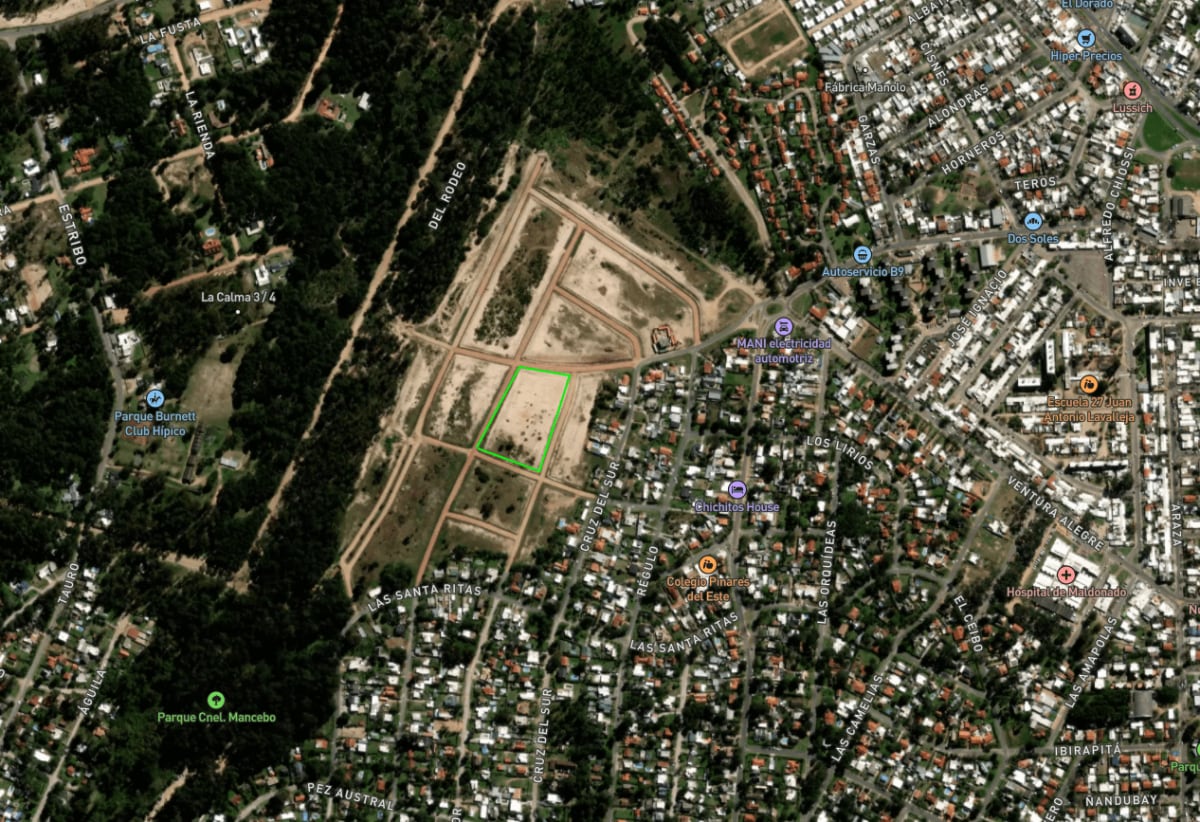
Perfect Plot for Investment

Modern 3BR House with Heated Pool Lugano
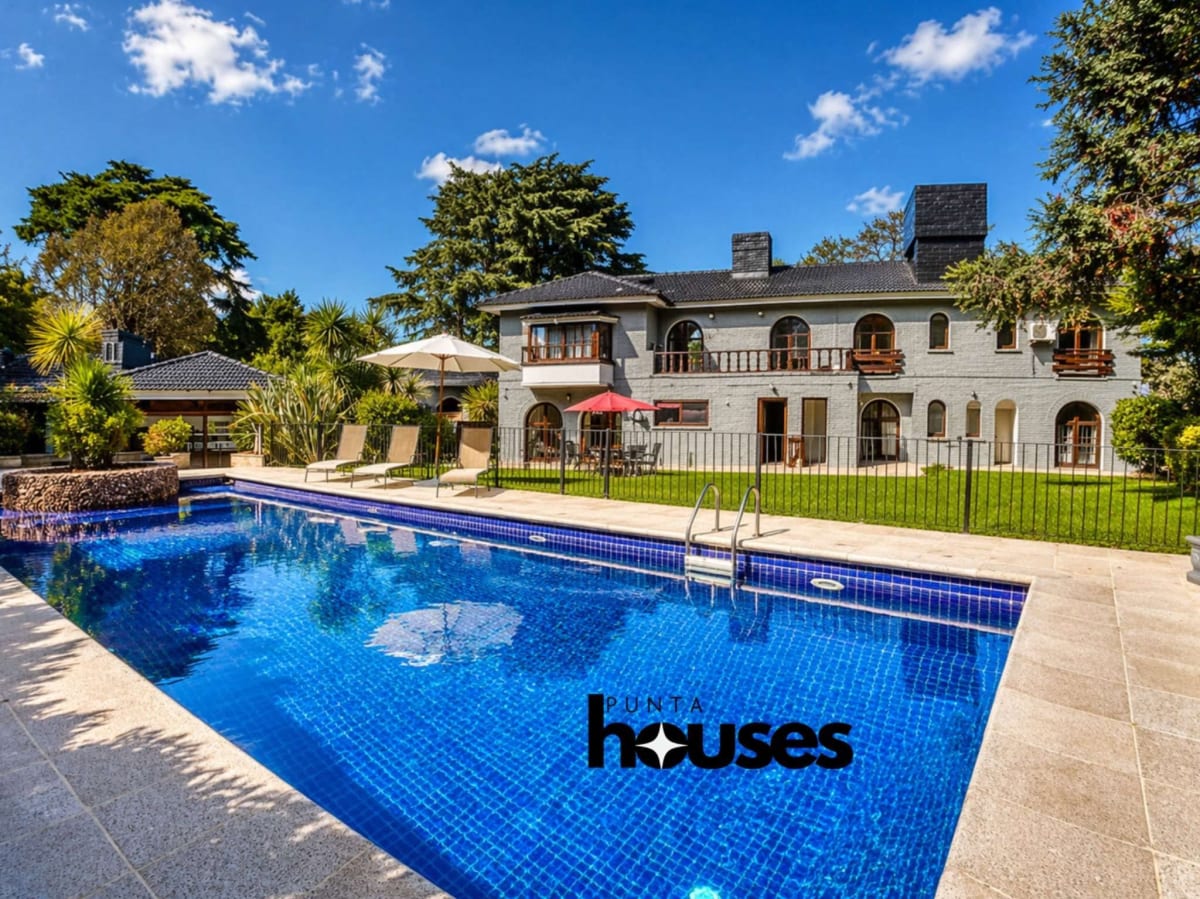
Lugano Luxury Home with 5 Suites & Pool
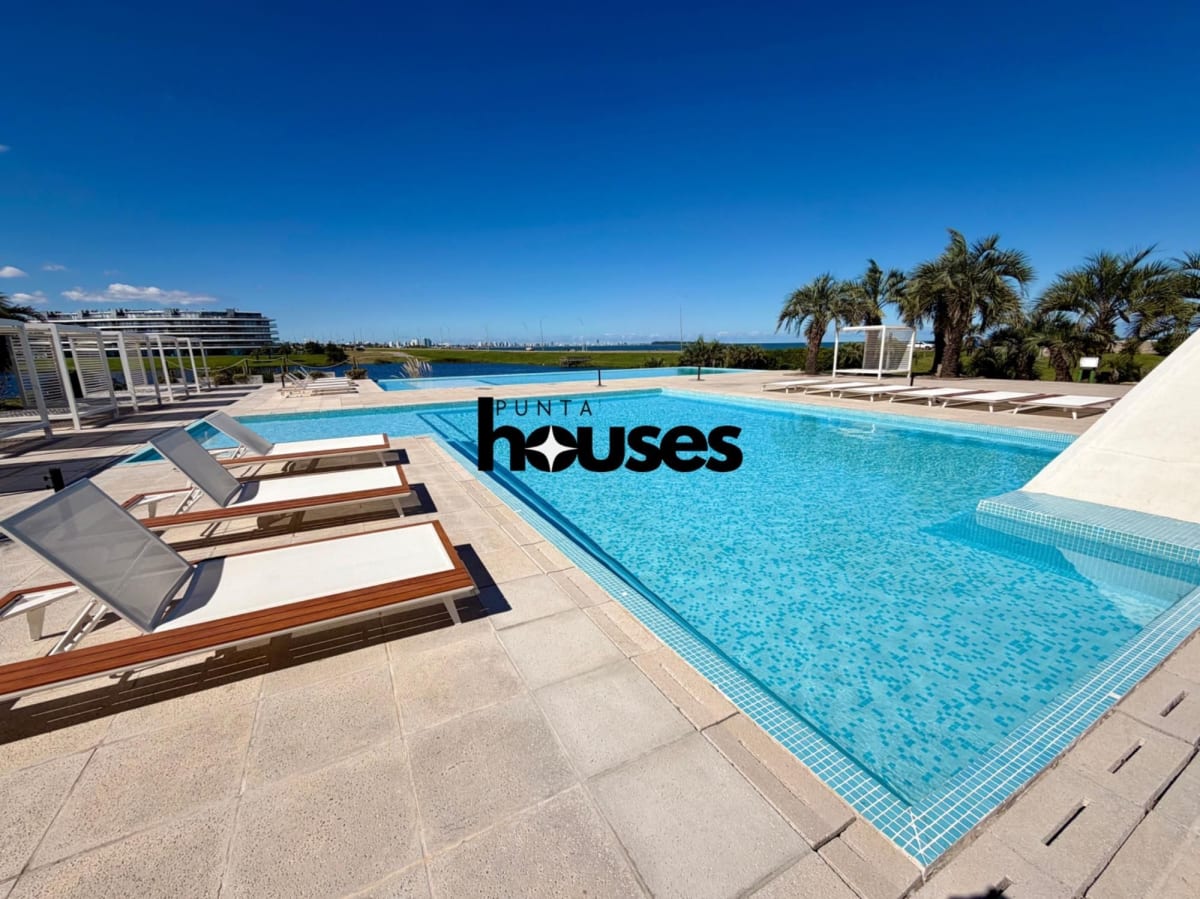
2BR Apartment Laguna and Ocean Views (310)
Interested in this area?
Our team knows every corner of this neighborhood. Let us help you find the right property.